
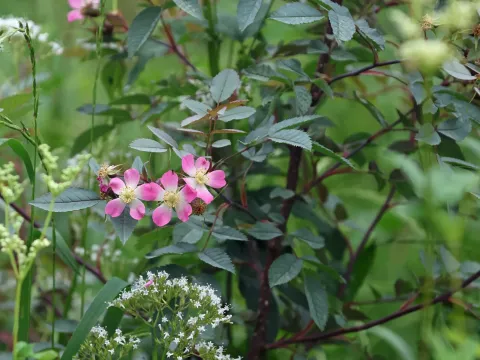
Red-leaved rose
Rosa glauca
Rosa glauca, commonly known as the red-leaved rose, is a deciduous shrub belonging to the Rosaceae family. It is native to the mountains of Central and Southern Europe, where it thrives in rocky habitats and woodland edges.
What the section contains
Red-leaved rose
The plant is widely recognized for its striking blue-green to purplish-red foliage and slender, arching stems. It is highly valued in gardening for its extreme hardiness, being capable of withstanding cold climates that many other rose species cannot tolerate.
To ensure optimal growth, this species requires a location with full sun exposure, which is crucial for maintaining the deep, distinctive color of its leaves. It is adaptable to a wide range of soil types, provided they are well-drained and not prone to waterlogging.
Maintenance is relatively straightforward, involving minimal pruning to remove dead or diseased wood. The plant is drought-tolerant once established and does not require frequent fertilization, making it a low-maintenance choice for large garden borders.
Industrially and horticulturally, it is utilized for creating dense, attractive hedges and is often used as a rootstock for ornamental roses due to its robust root system and resistance to various environmental stresses.
While the red-leaved rose is quite resilient, it can occasionally suffer from common rose diseases such as powdery mildew, especially if planted in poor air circulation areas.
Insect pests such as aphids, spider mites, and rose leafhoppers may feed on the foliage during hot and dry spells, potentially reducing the plant's aesthetic value.
Cultural practices, such as choosing an appropriate site with good airflow and ensuring proper plant spacing, are the first line of defense against these threats.
If an infestation occurs, horticultural oils or soaps are often effective treatments that minimize environmental impact while managing pest populations.
Monitoring the plant during the early growth stages is recommended to catch any issues before they manifest as severe damage to the foliage or overall plant health.