
Danubian whitebeam
Sorbus danubialis
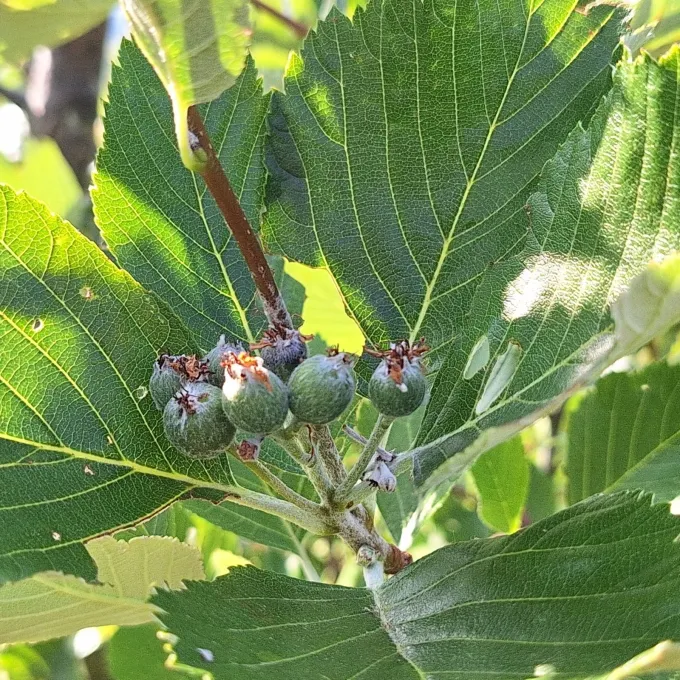
Description
Growing requirements
The Danubian whitebeam (Sorbus danubialis) belongs to the Rosaceae family. This species is native to the Danube region of Central Europe. It is a deciduous tree known for its resilient nature and its ability to thrive in various temperate environmental conditions.
The culture requires sunny locations to ensure proper fruit maturation and optimal growth. It is adaptable to a wide range of soil types, provided that they are well-drained and possess moderate fertility. Neutral to slightly acidic soils are ideal for the plant's long-term health.
Agricultural practices for this species focus on site preparation and consistent moisture management. During the initial growth stages, regular irrigation is essential. Mulching the area around the base of the trunk helps retain soil moisture and suppresses weed growth.
Proper pruning is a vital part of the maintenance program. It encourages better light penetration into the inner canopy, which significantly increases the quality and quantity of fruit production. Periodic fertilization, focusing on nitrogen and phosphorus, supports overall development.
The species serves various purposes, from urban greening and landscape design to the production of nutrient-rich fruits. The wood is also valued for its high quality in woodworking, making it a versatile agricultural and forestry asset.
Main diseases and pests
Common pests include aphids, scale insects, and various types of moth larvae that feed on leaves. Monitoring the tree during the budding season is crucial to identify and treat infestations before they cause significant damage to the foliage.
Fungal diseases like powdery mildew and scab are the primary threats to tree health, especially in seasons with high rainfall. Applying appropriate fungicides and ensuring good air circulation within the canopy are effective prevention methods.
Root rot caused by stagnant water or poor drainage can be detrimental. It is important to avoid planting in areas prone to waterlogging to ensure the longevity of the root system and the health of the entire tree.
Animal damage, particularly from deer or rodents stripping the bark in winter, requires physical protection such as tree guards or mesh. Protecting the base of the trunk prevents secondary infections and bark necrosis.
Integrated pest management strategies should be adopted to minimize chemical intervention. Regular inspection and maintaining high levels of plant vigor remain the best defenses against both diseases and insect pests.