
David's Rose
Rosa davidii
David's Rose (Rosa davidii) is a species of wild rose belonging to the Rosaceae family. It is a large, deciduous, vigorous shrub that can reach significant heights.
What the section contains
David's Rose
Native to the mountainous regions of Western China, it is well-adapted to high-altitude environments, making it a hardy species for temperate gardens.
The plant thrives in well-drained, fertile soils with a neutral or slightly acidic pH level. It requires a sunny position to ensure maximum flower and fruit production.
As a mountain-origin plant, it is quite frost-tolerant, meaning it can be cultivated in regions with harsh winters without significant risk of damage.
Proper spacing is crucial when planting, as this shrub can grow quite wide. Regular organic mulching helps retain soil moisture and suppresses competing weeds.
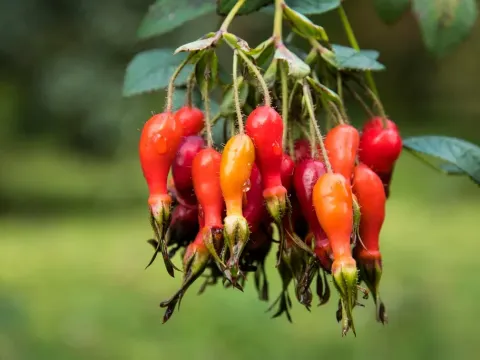
The primary use of David's Rose is in landscaping, where it is highly valued for its elegant habit, beautiful pink flowers, and long, pendulous red fruits.
In garden design, it is often utilized as a specimen plant or integrated into shrub borders to provide seasonal interest throughout the year.
The hips (fruits) are nutritionally significant, containing high levels of vitamin C and antioxidants, often harvested for jams or herbal teas.
Due to its dense growth and thorny branches, it serves as an excellent natural barrier or hedgerow plant for perimeter security in large gardens.
It also plays an important role in ecological gardening by providing food and shelter for birds during the cold winter months when fruits persist.
Common fungal diseases, such as powdery mildew, often occur during humid and stagnant weather conditions, affecting both leaves and young stems.
Black spot is another notable fungal issue that requires diligent management to prevent premature defoliation of the shrub during the growing season.
Aphids are the most frequent insect pests, clustering on tender new buds, while spider mites may thrive if the plant experiences drought stress.
Scale insects can occasionally infest the older branches, potentially weakening the shrub if left unchecked for prolonged periods.
The best control strategy involves maintaining optimal plant health through balanced nutrition, correct pruning, and early detection of pest activity.