
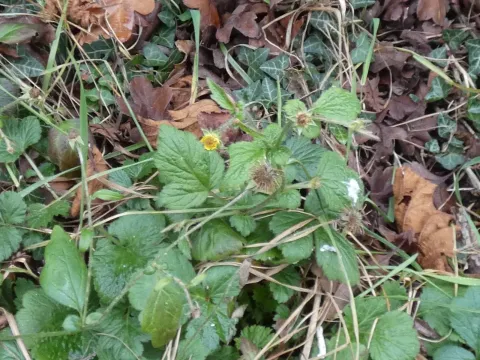
Avens
Geum L.
Avens seeds are typically sown in late autumn directly into the ground or indoors in early spring using seedling trays. Seeds should be covered lightly with substrate, ensuring they are not buried deeper than 1-2 centimeters for optimal germination.
What the section contains
 Chilean avens
Geum quellyon Sweet
Chilean avens
Geum quellyon Sweet
 Geum coccineum
 Sm.
Geum coccineum
Geum coccineum Sm. x Geum quellyon Sweet
Geum coccineum
Geum coccineum Sm.
Geum coccineum
Geum coccineum Sm. x Geum quellyon Sweet
 Geum ternatum
 (Stephan) Smedmark
Hybrid avens
Geum quellyon Sweet x Geum rivale L.
Geum ternatum
Geum ternatum (Stephan) Smedmark
Hybrid avens
Geum quellyon Sweet x Geum rivale L.
 Intermediate Avens
Geum x intermedium Ehrh.
Intermediate Avens
Geum x intermedium Ehrh.
 Jankae avens
Geum x jankae Beck
Jankae avens
Geum x jankae Beck
 Water avens
Geum rivale L.
Water avens
Geum rivale L.
 Wood avens
Geum urbanum L.
Wood avens
Geum urbanum L.
Avens
Vegetative propagation via division is the preferred method for maintaining specific cultivars. This process is best performed in early spring or late August, allowing the plants to re-establish before extreme temperature changes occur.
When starting from seeds, seedlings generally emerge within 2 to 3 weeks if kept at a temperature of approximately 18–20 degrees Celsius with consistent, moderate soil moisture levels.
Transplanting seedlings to their final location is recommended when the plants have developed at least two sets of true leaves, with a spacing of 30–40 centimeters to ensure sufficient air circulation.
The chosen site must be well-drained, as Geum species are highly susceptible to root rot caused by waterlogged soil, particularly during the dormant winter period.
Avens belongs to the Rosaceae family and is a robust perennial herb widely distributed in temperate regions. It thrives in sunny or partially shaded spots that are protected from heavy, gusting winds.
While tolerant of various soil types, the plant achieves the best development in fertile, neutral, and well-drained loamy soils. Proper drainage is the most critical factor for long-term survival.
The plant is known for its winter hardiness; however, in regions with harsh, snowless winters, a protective layer of mulch or dry leaves around the root zone is advisable to prevent frost damage.
Regular but moderate watering is necessary during the active growth and flowering season. Drought may stunt growth, so mulch can be used to help retain moisture in the soil without causing over-saturation.
Periodic fertilization with balanced mineral fertilizers, once in early spring and once before the budding stage, provides the essential nutrients required for strong growth and vibrant flowering.
Avens serves multiple purposes, ranging from its popularity in decorative landscaping to its historical use as a source of medicinal and aromatic raw materials in the pharmaceutical industry.
The rhizomes of various Geum species contain tannins, essential oils, and gein, which are valued for their potential anti-inflammatory and astringent properties in traditional herbal medicine.
In culinary applications, the dried roots are sometimes used as a spice; they possess a distinct clove-like aroma, making them a unique additive for specific beverages and traditional food products.
Decorative yield is measured by the quality, abundance, and duration of the blooms, which can last for several weeks if the plant is maintained in optimal environmental conditions.
Commercial harvesting of the roots is conducted in the autumn once the growing season concludes, as this is when the concentration of bioactive secondary metabolites in the rhizomes is at its peak.
While generally robust, Avens can be susceptible to fungal issues such as powdery mildew or root rot if grown in poorly ventilated areas or soils that lack proper drainage management.
Preventive measures include keeping the planting area clean, removing weeds regularly, and ensuring that no debris accumulates around the base of the plant to minimize the risk of pathogen buildup.
Common pests include aphids and spider mites, which feed on the sap of young shoots and foliage, leading to weakened plants and a significant reduction in overall visual appeal.
Effective management of these pests involves using approved insecticides or acaricides at the first signs of infestation, ensuring that guidelines for application are followed carefully.
Crop rotation and occasional plant rejuvenation through division every 3 to 4 years help maintain vigor and reduce the likelihood of chronic soil-borne disease issues.
Maintenance harvesting involves trimming off faded flower stalks to encourage a tidy appearance and potentially trigger a secondary flush of blooms later in the season.
For medicinal purposes, rhizomes are carefully excavated, cleared of soil, and washed thoroughly in cold running water to remove impurities before they are processed for drying.
The washed material should be cut into small pieces and dried in well-ventilated areas or specialized drying equipment at temperatures below 45 degrees Celsius to preserve the essential oils.
Quality control is vital; correctly dried roots should retain their characteristic spicy fragrance and firm texture, which confirms that the active chemical components remain intact.
Final storage should take place in airtight containers kept in a cool, dark, and dry location to protect the raw material from humidity and light degradation over long periods.