
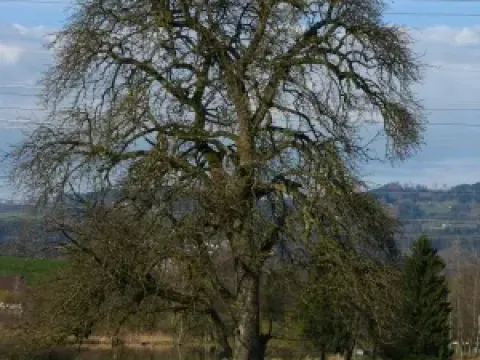
Balansa pear
Pyrus balansae
The Balansa pear (Pyrus balansae) is a distinct species within the Rosaceae family. Native to regions in the Eastern Mediterranean and Near East, this species is highly regarded by botanists and pomologists for its genetic hardiness and potential for breeding climate-resilient pear cultivars.
What the section contains
Balansa pear
Botanically, Pyrus balansae typically presents as a deciduous tree with a dense canopy and moderate growth rate. Its leaves are generally ovate to elliptical with serrated margins, and the tree produces small to medium-sized pome fruits that are structurally similar to other wild pear species found in the region.
Regarding climatic requirements, the species is adapted to temperate and Mediterranean conditions. It thrives in regions with hot, dry summers and cool, wet winters. The tree exhibits excellent cold tolerance, allowing it to survive in mountainous altitudes where many commercial varieties might struggle.
Soil preferences for this species are specific: it requires well-drained, porous soils. It is particularly well-suited to stony or sandy loams. Heavy clay soils that retain excessive moisture are discouraged, as the species is susceptible to root rot if the environment remains constantly waterlogged.
Horticultural management involves routine structural pruning to maintain airflow within the canopy. This practice is essential to ensure adequate light penetration and to reduce the incidence of fungal pathogens. Supplemental irrigation may be necessary during the first few years of establishment, but mature trees are often drought-tolerant.
The primary threats to Pyrus balansae include fire blight (Erwinia amylovora), a devastating bacterial disease, and apple scab or pear scab (Venturia pyrina). These pathogens can significantly impact the health of the tree if environmental conditions are conducive to their spread.
Pests that commonly target this species include the pear psylla and the codling moth. Managing these pests requires a proactive approach, including monitoring population levels through traps and applying targeted interventions only when necessary to preserve the ecological balance of the orchard environment.