
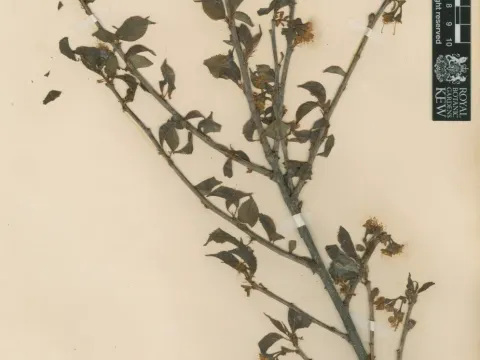
Tatsien cherry
Prunus tatsienensis
The Tatsien cherry (Prunus tatsienensis) is a member of the Rosaceae family. It is a distinct species native to the mountainous regions of Central and Western China, growing in temperate zones where it has evolved to thrive in high-altitude environments.
What the section contains
Tatsien cherry
The plant grows as a small deciduous tree or shrub, typically reaching moderate heights. It is characterized by its serrated leaves and relatively small flowers, which adapt it well to the cooler temperatures of its natural mountain habitat.
Regarding soil requirements, the species performs best in well-drained, fertile substrates. It is sensitive to waterlogging, necessitating proper drainage to prevent root rot, which is a common issue for many Prunus species in poorly managed soils.
In terms of climate, it demands a cold winter dormancy period to initiate spring growth and flowering properly. It exhibits high tolerance to cold and wind, reflecting its mountainous origin, but it requires sunny locations to ensure optimal development.
Economically, this species is highly valued in botanical research and breeding programs. It serves as a source of wild germplasm, useful for introducing genes associated with cold hardiness and disease resistance into commercial cherry cultivars.
The Tatsien cherry is susceptible to common stone fruit diseases, including shot-hole fungus and various leaf spots, which thrive in humid conditions and can lead to premature defoliation.
Pest pressures primarily include aphids and mites that infest young leaves. These pests can weaken the plant's vigor, making it more susceptible to environmental stresses and secondary fungal infections.
Effective management requires a regular pruning schedule to maintain an open canopy. This practice improves air circulation, significantly reducing the moisture levels that promote fungal pathogen development.
Integrated pest management (IPM) strategies, including the use of dormant oil sprays and regular monitoring, are recommended to maintain plant health without excessive reliance on synthetic chemicals.
Environmental stress, such as extreme heat during the growing season, can also exacerbate the plant's vulnerability to secondary pests, highlighting the importance of proper site selection and irrigation management.