
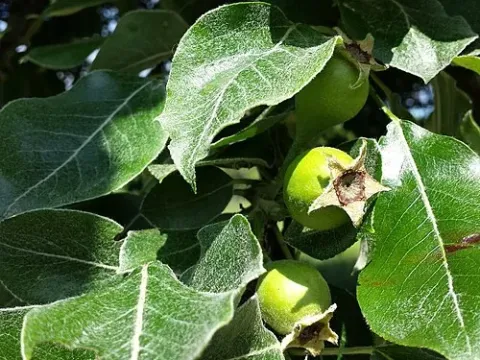
Austrian pear
Pyrus austriaca
Austrian pear (Pyrus austriaca) is a distinct hybrid species belonging to the Rosaceae family. It is recognized as a cross between Pyrus communis and Pyrus salicifolia, resulting in a tree that displays both ornamental qualities and hardiness.
What the section contains
Austrian pear
The native distribution area is primarily centered in Central Europe. The tree is well-adapted to habitats with rocky, calcareous soils where water drainage is efficient, showcasing its tolerance to low-nutrient substrates.
Climate requirements include a temperate environment with warm, dry summers. The species shows significant drought resistance, making it a valuable subject for agro-forestry projects in areas where irrigation capacity is limited.
Soil management should focus on maintaining adequate aeration. While the species is resilient, it thrives in well-drained loamy or sandy-loam soils. It is highly sensitive to waterlogged conditions, which can lead to rapid decline in vitality.
Cultural practices should emphasize site selection with full solar exposure. Proper pruning should be carried out during the dormant season to ensure balanced structural growth and to minimize shading within the canopy.
Fire blight (Erwinia amylovora) remains the most significant threat to the health of Pyrus austriaca. Strict sanitation protocols and the removal of infected wood are essential to manage outbreaks in orchard settings.
Pear psylla (Cacopsylla pyri) is a common pest that impacts fruit quality and leaf health. Integrated Pest Management (IPM) strategies, including biological control, are recommended to maintain ecological balance in the orchard.
Scab caused by Venturia pirina often occurs during wet, cool spring seasons. Preventive fungicide applications, particularly during the budding phase, are standard in effective horticultural practice.
Bark beetles may attack stressed trees, especially those suffering from environmental extremes. Maintaining tree vigor through proper hydration and nutrition is the first line of defense against wood-boring insects.
Winter injury can occur during late spring frosts if the tree is positioned in a low-lying frost pocket. Careful site mapping is advised to ensure that cold air drainage is not blocked, protecting the vulnerable blossoms.