
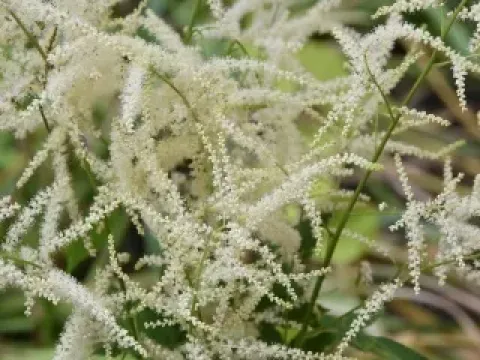
Aruncus hybrid
Aruncus hybrids
Aruncus hybrid (Aruncus hybrids) belongs to the Rosaceae family. This perennial herbaceous plant is a cultivated selection designed to bring elegant, plume-like inflorescences to garden borders and shaded landscape areas.
What the section contains
Aruncus hybrid
The plant originates from ancestors adapted to woodland environments in the Northern Hemisphere. Consequently, it thrives in partial shade where its delicate foliage is protected from intense midday heat and scorching sun exposure.
For optimal growth, Aruncus requires deep, nutrient-rich soil with excellent moisture retention. While the plant is quite thirsty, it is essential to ensure that the soil remains well-drained to prevent anaerobic conditions around the root crown.
Climate requirements for the hybrid are centered on moderate temperature ranges and consistent rainfall. In regions with dry summers, irrigation is critical to maintain the lush appearance of the foliage throughout the season.
Agronomic maintenance includes mulching to suppress weeds and conserve soil moisture, alongside the application of balanced organic fertilizers in early spring to support the vigorous development of the crown.
While generally robust, the Aruncus hybrid is susceptible to issues if environmental conditions are not met. Overly moist or poorly ventilated sites can promote the development of powdery mildew and leaf spot diseases.
Pests such as aphids and spider mites are the most common biological threats. These pests tend to target the undersides of the leaves, weakening the plant by draining sap and causing visible chlorosis or tissue distortion.
Root rot is a major risk in heavy, waterlogged clay soils. Once root health is compromised, the plant struggles to transport nutrients, leading to yellowing of the foliage and premature wilting during hot weather.
Control strategies involve a combination of proper plant spacing to facilitate airflow and, if necessary, the application of horticultural soaps or systemic pesticides suitable for ornamental plantings.
Keeping the area clean of old debris and ensuring good overall plant hygiene significantly reduces the survival rate of pathogens, keeping the Aruncus hybrid in peak condition for many years.