
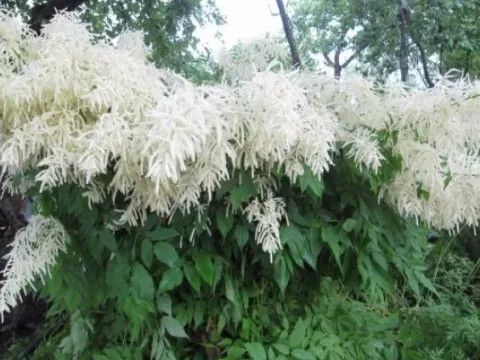
Aruncus sinensis
Aruncus sinensis
Sowing seeds of Aruncus sinensis is typically performed before winter in open ground or containers, as seeds require mandatory stratification to germinate successfully.
What the section contains
Aruncus sinensis
For spring sowing, seeds are subjected to artificial cooling at temperatures between 0 and +5 degrees Celsius for 30–45 days before being placed into the substrate.
To speed up the seedling production process, gardeners use peat pellets or light soil substrates with high moisture retention and excellent aeration.
Seeds should be covered with a thin layer of soil, as they require minimal light for germination but need stable surface moisture.
Seedlings appear irregularly, so it is important to maintain an indoor temperature of about +18 to +20 degrees Celsius until true leaves develop.
Aruncus sinensis belongs to the Rosaceae family and originates from the mountainous regions of China, where it grows in damp forests and along stream banks.
The crop prefers semi-shaded or shaded areas, as direct sunlight causes leaf scorching and can lead to the desiccation of the root system.
The soil must be fertile, rich in organic matter, with a neutral to slightly acidic pH level and a consistent moisture level.
This plant exhibits high frost resistance and can overwinter in temperate climates without extra coverage, provided there is adequate snow cover.
Agronomic management includes regular watering during dry periods and mulching the root zone to maintain an optimal microclimate for the roots.
This species is highly resistant to most diseases; however, excessive moisture can lead to fungal issues such as powdery mildew.
Among pests, leaf-chewing insects and aphids pose the greatest threat to young shoots, potentially slowing down the plant's overall development.
To prevent infestations, it is necessary to maintain proper spacing during planting to ensure adequate air circulation between the bushes.
Preventive application of fungicides and insecticides should be carried out in early spring, before the onset of rapid vegetative growth.
Timely weeding and removal of competing vegetation in the root zone significantly reduce the risk of disease spread and nutrient competition.
The primary use of Aruncus sinensis is in ornamental gardening and landscape design, where it serves as a stunning specimen or background plant.
Harvesting inflorescences for floral arrangements should be done during the full bloom stage, when flowers are maximally open but not yet shedding.
After cutting, stems must be placed in water immediately to maintain decorative appeal; they are also suitable for dried floral arrangements.
Post-flowering care involves trimming dry inflorescences, which keeps the bush tidy and aids in nutrient accumulation within the rhizome.
By late autumn, the aerial part of the plant should be cut back almost to the ground level, preparing the culture for its dormant winter period.