
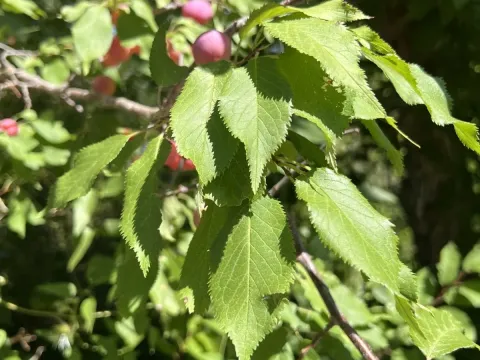
Prunus orthosepala
Prunus orthosepala
Propagation of Prunus orthosepala is primarily achieved through seed sowing or grafting onto suitable rootstocks. Seeds require a mandatory period of cold stratification in moist conditions to break dormancy and ensure uniform germination in the spring.
What the section contains
Prunus orthosepala
The optimal time for transplanting seedlings into their permanent location is early spring, before the onset of active sap flow. Fall planting is also viable in temperate regions provided that the root system has sufficient time to establish before the ground freezes.
When sowing seeds in nursery beds, the depth should be calibrated based on soil texture, usually ranging between 3 to 5 centimeters. Proper spacing is essential to prevent overcrowding and ensure adequate airflow for developing plants.
As a member of the Rosaceae family, this species requires specific nursery management practices common to stone fruits. Selecting healthy, disease-free parent material is critical for ensuring the vigor of the future orchard.
Mechanical sowing is possible in large-scale operations, provided that the soil is properly prepared and cleared of debris. Regular moisture control is necessary during the initial establishment phase to support healthy root development.
Prunus orthosepala thrives in sunny, well-drained locations with protection from strong, drying winds. It exhibits significant resilience to diverse soil types, though it performs best in fertile, neutral-pH loamy soils with high organic content.
Adequate soil aeration is vital, as this species is sensitive to waterlogging. Implementing a robust drainage system is recommended in areas prone to heavy precipitation to prevent root rot and other moisture-related pathologies.
Nutrient management focuses on balanced fertilization programs, emphasizing potassium and phosphorus to enhance cold hardiness and fruit quality. Nitrogen applications should be regulated to avoid excessive vegetative growth at the expense of fruit production.
Pruning is a fundamental agrotechnical practice used to shape the canopy, promote sunlight penetration, and improve fruit distribution. Proper branch architecture significantly lowers the humidity within the canopy, reducing disease pressure.
Temperature management during the flowering phase is crucial for fruit set. Using advanced meteorological monitoring, growers can plan protective measures against spring frost events to safeguard the developing buds.
Yield potential in Prunus orthosepala is largely influenced by cross-pollination efficiency. Planting multiple compatible cultivars in close proximity is recommended to ensure optimal fruit set and higher overall orchard productivity.
The species typically reaches the onset of fruiting at 4 to 5 years of age. Peak production is achieved as the tree matures, provided that appropriate pruning and nutritional support are maintained throughout the life cycle.
The fruits are prized for their unique flavor profile and density, making them highly desirable for culinary use and industrial processing. Managing crop load is essential to maintain consistent fruit size and quality.
Soil moisture management during the fruit sizing stage is a key driver of total yield. Consistent irrigation schedules help prevent physiological disorders and ensure uniform ripening across the orchard.
Data-driven yield estimation allows growers to better plan for harvesting and logistics. Consistent maintenance of orchard health leads to stable production, avoiding the high annual fluctuations common in some plum varieties.
Fungal diseases such as Monilinia (brown rot) and Clasterosporium (shot hole disease) represent significant threats to Prunus orthosepala. An integrated pest management program, including timely fungicide applications, is standard practice.
Insect pests, including plum curculio and aphids, can cause substantial economic losses if left uncontrolled. Monitoring programs using pheromone traps allow for targeted insecticide use, minimizing chemical impact on the environment.
Boring insects can attack stressed trees, making overall tree vigor an important component of pest resistance. Keeping the orchard free of debris and diseased wood helps maintain a sanitary environment that discourages infestations.
Weed management in the tree rows reduces competition for water and nutrients while also eliminating alternative hosts for pests and pathogens. Mulching is an effective method for maintaining soil quality and suppressing weed growth.
Biocontrol agents are increasingly integrated into orchard management strategies. Encouraging beneficial predatory insects can significantly assist in keeping aphid and mite populations below economic injury levels.
Harvesting Prunus orthosepala is typically conducted through manual picking to ensure that only fruit at the correct stage of maturity is selected. This selective process guarantees high quality for the fresh market.
For processing fruit, mechanical harvesting options may be utilized, provided that the orchard is specifically designed for such equipment. Minimizing impact damage is the primary concern when utilizing mechanized harvest solutions.
Post-harvest handling is critical for maintaining fruit freshness. Rapid cooling and controlled storage temperatures are necessary to prevent rapid deterioration, especially for shipments intended for distant markets.
Packaging solutions should ensure sufficient ventilation to prevent condensation, which can accelerate fungal growth during storage. Proper crate design helps distribute the load and prevent fruit bruising during transit.
Economic success relies on the efficiency of the harvest operation. By aligning harvest timing with market demand and ensuring proper post-harvest protocols, growers can maximize the value of their fruit production.