
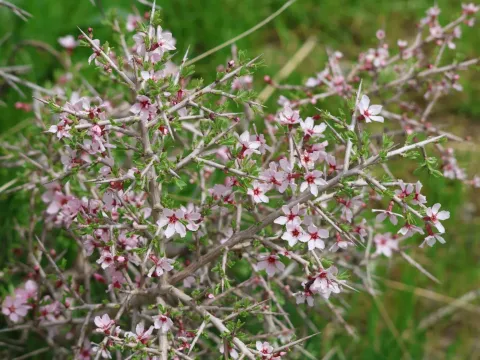
Prunus spinosissima
Prunus spinosissima
Prunus spinosissima, commonly known as the thorny plum, is a deciduous shrub belonging to the Rosaceae family. It is native to the arid and mountainous regions of Central and Western Asia, where it has evolved to thrive in harsh, semi-arid environments.
What the section contains
Prunus spinosissima
This species is highly prized for its exceptional drought tolerance and winter hardiness. It performs best in full sun exposure and requires well-drained soil, ideally with a neutral to slightly alkaline pH. The plant is remarkably resilient in low-fertility conditions.
Botanically, it is characterized by its compact, thorny structure, which serves as a defense mechanism against herbivores. The small, often pubescent leaves are adapted to minimize water loss, and its delicate white flowers typically bloom early in the spring season.
Cultivation practices for Prunus spinosissima are minimal. Once established, the shrub requires very little supplemental watering. Annual pruning is recommended primarily for maintenance, such as removing dead wood or shaping the shrub for aesthetic purposes.
In terms of agricultural use, it is frequently employed as an ornamental feature, particularly for creating impenetrable, low-maintenance hedges. Furthermore, it serves as a robust rootstock candidate for breeding climate-resilient stone fruit varieties.
Like many species in the Prunus genus, this plant is susceptible to fungal diseases such as blossom wilt (monilinia) and shot-hole disease (stigmina carpophila), particularly in regions with high spring humidity or frequent rainfall.
Common pests include aphids, scale insects, and various types of borers. Integrated pest management, including regular monitoring and the application of suitable insecticides when necessary, helps maintain the health and vigor of the shrub.
Root rot is a significant risk if the shrub is planted in heavy, waterlogged soil. Ensuring adequate soil aeration and proper drainage at the planting site is essential to prevent these severe fungal complications.
Maintaining proper spacing between plants helps ensure good air circulation, which reduces the prevalence of fungal spores. This is a simple but effective cultural practice for keeping the plant disease-free over many seasons.
Regular sanitation, including the prompt removal of infected branches and fallen debris, is crucial. These measures limit the ability of pathogens to overwinter near the base of the plant, protecting the integrity of the shrub.