
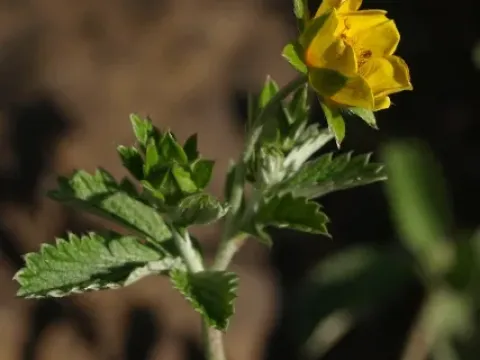
Potentilla argyrophylla
Potentilla argyrophylla
Potentilla argyrophylla, known for its resilient nature, is best propagated through seeds sown in autumn or early spring. For the best results, a period of cold stratification is recommended to break seed dormancy and ensure uniform germination.
What the section contains
Potentilla argyrophylla
When sowing in the spring, the target period is April, once the soil has warmed to at least 8–10°C. A fine, well-prepared seedbed is essential due to the small size of the seeds, which must be sown shallowly to ensure proper contact with the soil and light exposure.
For commercial production, a nursery-raised approach is highly effective. Starting seeds in seedling trays in March allows for the development of sturdy root systems, which can be transplanted to the field in May, giving the plants a head start in the growing season.
Standard field spacing involves rows approximately 45–60 cm apart. This configuration provides the necessary space for individual plant growth and facilitates the use of mechanical equipment for weeding and maintenance throughout the year.
Seed depth should never exceed 1 cm. Sowing too deep is a common cause of poor stand establishment. Maintaining consistent moisture in the top layer of soil during the first few weeks after sowing is crucial for successful emergence.
Potentilla argyrophylla is a hardy herbaceous perennial belonging to the Rosaceae family. It is naturally adapted to mountain environments, making it highly tolerant of temperature fluctuations and diverse light conditions.
The plant thrives in well-draining, loamy or sandy soils with a neutral or slightly acidic pH. Heavy clay soils that retain excess water are detrimental, as they frequently lead to root rot and other moisture-related pathologies.
Being light-demanding, it requires full sun exposure for optimal growth and secondary metabolite production. Sites with high solar radiation are preferred to maintain the characteristic silver-colored foliage and to maximize the density of the canopy.
While somewhat drought-tolerant once established, the plant requires consistent moisture during the peak vegetative phase. Adequate water supply during late spring and early summer is linked directly to higher dry matter yields.
Standard agrotechnical management includes regular soil aeration through cultivation between rows. Mulching can also be employed to regulate soil temperature and suppress weed competition, reducing the need for intensive labor.
The economic value of this crop is derived from its harvestable biomass, rich in tannins and flavonoids. Yield potential increases with the age of the plantation, typically peaking between the second and fourth years of continuous cultivation.
On well-managed medicinal farms, dry aerial biomass yields typically range from 15 to 25 quintals per hectare. Achieving these figures requires careful adherence to fertilization schedules, particularly with nitrogen during the spring growth flush.
To support plant longevity and root health, phosphorus and potassium should be applied as a post-harvest soil amendment. This practice strengthens the root structure and increases the plant's ability to survive harsh winter conditions.
Optimal plant density is a critical factor in yield maximization. Overcrowding can lead to resource competition and increased susceptibility to diseases, whereas sparse planting prevents full utilization of the available field area.
The plantation cycle generally lasts for 5 to 7 years. Beyond this period, the plant's vigor naturally declines, necessitating field rotation or the removal of old stocks to replenish the soil for subsequent crops.
The primary health risk to Potentilla argyrophylla is root rot, typically caused by poor drainage or over-irrigation. Proper site selection and soil preparation are the most effective preventive measures against these pathogens.
Pest issues are often limited to aphids and mites, which can cause significant stress to young leaves. Monitoring during the early growth stage is recommended, with localized intervention if pest density exceeds economic damage thresholds.
Powdery mildew can occasionally appear in environments with high humidity and poor air circulation. Improving spacing between plants and maintaining a clean field environment significantly reduces the risk of fungal outbreaks.
Weed management is paramount in the first year of establishment. Young plants are poor competitors, and failing to remove weeds can severely stunt growth and lead to early plantation failure.
- Regular field scouting for early disease detection.
- Use of disease-free seed stock.
- Crop rotation to break the disease cycle and improve soil fertility.
The harvest of aerial biomass is timed to coincide with the plant's full-flowering stage, as this represents the peak concentration of its active medicinal constituents. This window must be monitored closely to ensure high product quality.
Mechanical harvesting is carried out by mowing the crop at a height of approximately 5–10 cm. It is crucial not to cut too close to the root crown to allow for rapid regrowth and maintain the long-term viability of the root system.
Immediately post-harvest, the raw material must be transported to a drying facility. Drying should occur in a well-ventilated space, ideally with temperature control not exceeding 45°C to preserve heat-sensitive compounds.
Roots, when harvested for secondary herbal products, are collected in late autumn. These must be thoroughly washed to remove all soil particles before being processed for drying in a clean, dust-free environment.
Proper storage is essential to maintain the shelf life of the dried product. Keeping the material in a cool, dark, and dry area ensures that its chemical properties remain stable for up to two years post-harvest.