
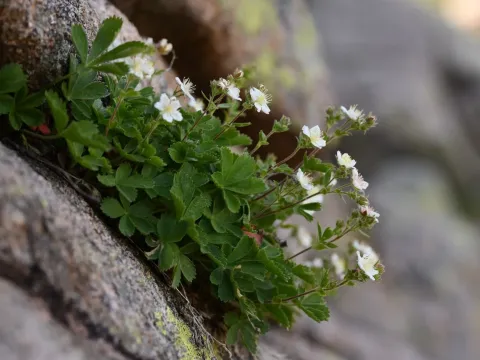
Potentilla crassinervia
Potentilla crassinervia
This species is not a commercial agricultural crop and is generally not sown in industrial field conditions. In its native habitat, reproduction occurs via natural seed dispersal, which relies on specific alpine stratification patterns to ensure successful germination.
What the section contains
Potentilla crassinervia
When cultivating in research or botanical settings, seeds are typically sown in late autumn. A well-draining substrate with a high proportion of gravel or grit is essential to replicate the rocky environment of the species' origin.
Successful sowing requires strict temperature control, simulating the seasonal cooling of the Mediterranean highlands. The medium must remain moist but not waterlogged, as excess moisture quickly leads to seed rot in this sensitive species.
Germination is typically slow and requires a period of cold stratification lasting 4 to 6 weeks. Following this, the seeds should be exposed to bright light, which acts as a secondary trigger for the initiation of the growth cycle.
Managing weed competition is vital during the early growth stages, as the plant develops slowly. The young seedlings are delicate and require high levels of atmospheric oxygen and moderate temperature fluctuations to thrive.
Potentilla crassinervia is a rare endemic species native to the high-altitude rocky terrains of Corsica. As a member of the Rosaceae family, it has evolved to occupy niche habitats such as mountain crevices and exposed scree slopes.
The plant strictly requires a mineral-rich yet nutrient-poor substrate that mimics its natural high-alpine environment. Poor drainage is the primary limiting factor, as the roots are highly susceptible to decay in heavy, moisture-retaining soils.
The ideal climate involves distinct seasonal shifts with cool, snowy winters and dry, sunny summers. The plant is adapted to intense solar radiation and constant wind, which helps prevent the buildup of humidity around the foliage.
In cultivation, avoiding nitrogen-rich fertilizers is necessary to prevent weak, etiolated growth that makes the plant prone to collapse. The plant’s reliance on its deep root system means it must be placed in deep pots or natural rockeries.
Low humidity levels are preferred, making this species challenging to maintain in lowland areas with humid summers. Maintaining the correct microclimate involves ensuring excellent airflow around the base of the plant at all times.
Root rot caused by Oomycetes and various soil-borne fungi represents the most significant threat to the survival of this plant. These pathogens proliferate rapidly if the substrate remains saturated for even short periods.
Pests such as alpine weevils and certain Lepidoptera larvae may feed on the leaves and developing buds. While the thick, leathery leaves provide some defense, concentrated infestations can severely weaken individual plants.
Biotic stress often arises from the encroachment of more aggressive high-altitude flora. Since Potentilla crassinervia grows slowly, it can easily be outcompeted for resources in disturbed or managed environments if not monitored.
Fungal leaf spots can occur when air circulation is compromised or during unseasonably wet summer months. Proactive ventilation management is the most effective way to prevent the spread of such diseases in a cultivated setting.
Structural damage to the root system during handling or repotting increases the plant's susceptibility to pathogens. Careful management of the root environment is essential for maintaining a healthy and resilient specimen.