
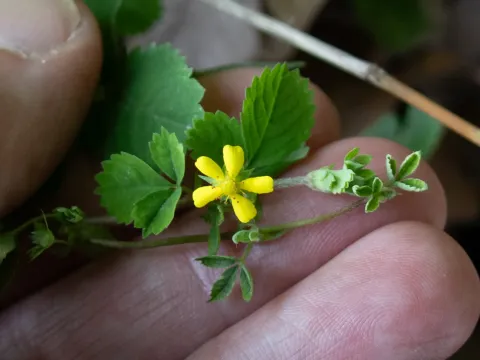
Potentilla centigrana
Potentilla centigrana
Potentilla centigrana is a perennial herbaceous plant belonging to the Rosaceae family. It is predominantly found in East Asian regions, where it thrives in naturally wet environments such as riverbanks, moist meadows, and marshy areas.
What the section contains
Potentilla centigrana
The plant exhibits specific botanical adaptations to water-rich habitats. Its foliage is designed to withstand high humidity levels, while its root system is specialized for anchoring in soft, organic-rich soil substrates that are typical of wetland ecosystems.
Regarding climatic requirements, the plant prefers temperate conditions. It is remarkably hardy, capable of enduring cold winters, which allows it to maintain its population across various northern latitudes in its native range.
Soil quality is paramount for this species. It prefers neutral to slightly acidic soil conditions with high moisture retention capacity. While it can survive in various light conditions, it performs best in partial to full sun provided that soil moisture is consistent.
Cultivation of this species in an agricultural setting is primarily focused on soil conservation and restoration projects. Its dense growth habit makes it an excellent choice for stabilizing soil prone to water erosion.
The primary threats to Potentilla centigrana include various fungal pathogens that flourish in high-moisture environments. Leaf spot diseases and root rot are the most common issues when drainage is inadequate.
Insect pests, including aphids and leaf-eating beetles, pose a recurring challenge. These pests can significantly reduce the photosynthetic capacity of the plant if left unmanaged during the peak growing season.
Environmental degradation, specifically the draining of wetlands and changing water tables, poses the greatest threat to its long-term survival in the wild, as it is highly dependent on consistent moisture.
Competition from invasive plant species is another critical factor. Because it grows in productive, moist areas, it is frequently outcompeted by more aggressive weeds if the site is not properly managed.
Effective management strategies should focus on maintaining natural hydration levels and ensuring sufficient space between plants to allow for airflow, which significantly reduces the risk of fungal outbreaks.