
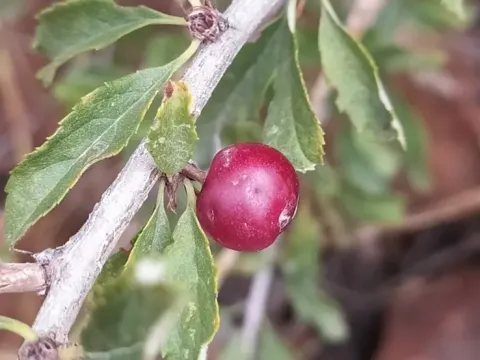
Two-faced plum
Prunus bifrons
The two-faced plum (Prunus bifrons) belongs to the Rosaceae family and is known for its distinct botanical characteristics. It typically grows as a small, resilient shrub or tree adapted to specific environmental conditions, demonstrating high ecological flexibility.
What the section contains
Two-faced plum
Successful cultivation requires a location with full sun exposure to ensure optimal photosynthesis and fruit development. The soil must be well-drained and light, as excessive moisture in the root zone can significantly hinder the growth and health of the plant.
Climate requirements for this species are centered around its ability to withstand fluctuating temperatures in arid to semi-arid zones. Providing consistent irrigation during the establishment phase is crucial for developing a deep and robust root system.
Standard agronomic practices for Prunus bifrons include systematic pruning to maintain a balanced canopy structure. This practice improves air circulation, reduces the humidity trapped within the branches, and facilitates easier harvesting during the peak season.
In terms of agricultural utility, this plant is increasingly studied for its breeding potential and resilience. The fruits, while niche, contribute to local food processing and are valued for their specific chemical composition suitable for artisanal food production.
Fungal diseases remain the primary threat to the two-faced plum, with monilia and shot-hole disease being the most prevalent. Implementing a rigorous disease prevention schedule, including copper-based sprays during the dormant stage, is highly recommended.
The plum fruit moth is the most significant pest, capable of causing substantial crop loss. Integrated pest management strategies, combining biological controls and selective insecticides, are essential for maintaining high yield levels throughout the season.
Aphid infestations are a common issue that weakens young foliage and can transmit various plant viruses. Monitoring for early signs of infestation and utilizing mild insecticidal soaps can effectively mitigate the spread of these pests.
Mite populations can increase during dry, hot weather, causing leaf stippling and early senescence. Ensuring adequate water supply and promoting beneficial predatory insects are effective non-chemical ways to keep mite populations under control.
Environmental stress, particularly bark cracking caused by extreme thermal oscillations, requires protective measures. Painting the trunk with whitewash or using protective wraps helps prevent tissue damage and subsequent vulnerability to secondary infections.