
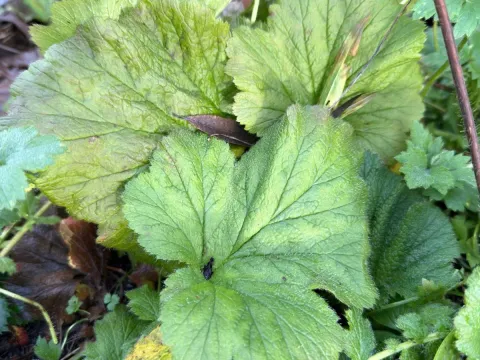
Large-leaved avens
Geum macrophyllum
Large-leaved avens is typically propagated via seeds or rhizome division. For direct sowing in the field, seeds should be planted in late autumn or early spring to ensure they undergo the necessary cold stratification period.
What the section contains
Large-leaved avens
When starting indoors, seeds are sown in March into light, well-draining soil. The seeds are lightly covered and kept at a stable temperature of approximately 18–20 degrees Celsius until germination occurs.
Transplanting seedlings to their final location is carried out after the risk of frost has passed in late spring. Proper spacing of at least 35 cm is essential to allow for the plant's wide leaf rosettes to develop fully.
Successful establishment relies on keeping the soil moist during the first few weeks after planting. Mulching can help retain soil moisture and suppress weed competition during the early stages of growth.
The culture is vigorous once established, rapidly filling the allotted space with its characteristic foliage. It is generally reliable and does not require complex interventions once it reaches maturity.
As a member of the Rosaceae family, Geum macrophyllum thrives in moist, fertile, and well-drained soils. It exhibits a preference for organic-rich environments where moisture is consistently available.
The plant demonstrates significant environmental flexibility, tolerating both full sun and partial shade. In warmer climates, afternoon shade is highly beneficial to prevent leaf scorch and maintain plant vigor.
Soil pH should ideally be neutral or slightly acidic for optimal nutrient uptake. Regular incorporation of organic matter, such as compost, improves soil structure and supports long-term plant health.
Watering requirements are moderate but must be consistent. During the peak of summer, irrigation frequency should be increased to prevent the wilting of the large, thin leaves that characterize the species.
Fertilization is best performed in early spring as new growth emerges. A balanced granular fertilizer or organic mulch is usually sufficient to support the plant's nutrient needs throughout the growing season.
Powdery mildew is a common concern in environments with poor air circulation. To manage this disease, growers should ensure adequate spacing and avoid overhead watering that keeps foliage wet for too long.
Root rot caused by Phytophthora or Pythium species may develop in waterlogged soil. Ensuring a well-structured soil profile and avoiding excessive compaction are the best strategies to mitigate these risks.
Aphids and spider mites are the most frequent insect pests. These can be effectively managed with insecticidal soaps or neem oil applications when pest pressure is detected early in the season.
Slugs and snails can cause significant damage to young, tender foliage during wet spring weather. Protective barriers or targeted control measures may be necessary in areas with high pest populations.
Implementing a regular scouting program allows for the early detection of diseases and pests, reducing the need for intensive chemical applications and promoting a healthier crop.