
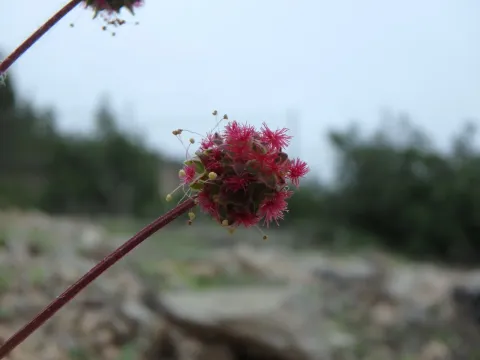
Large-fruited burnet
Sanguisorba megacarpa
Sowing of Sanguisorba megacarpa is best performed in early spring, once soil temperatures reach 5–8 degrees Celsius, or in late autumn as a dormant seeding practice.
What the section contains
Large-fruited burnet
The seeds exhibit natural dormancy due to a hard coat, requiring scarification or pre-soaking in growth stimulants to ensure rapid and uniform germination.
The optimal seeding depth is 1.5–2 centimeters to provide sufficient contact with the moist soil matrix, preventing the seeds from drying out during the initial stages.
A seeding rate of 8–10 kg per hectare is recommended for pure stands, ensuring adequate spacing to avoid intraspecific competition among the developing seedlings.
Post-sowing rolling is highly recommended to improve soil-to-seed contact, which promotes consistent capillary water movement and enhances the overall establishment rate.
The large-fruited burnet is a perennial herbaceous plant from the Rosaceae family, recognized for its extreme cold hardiness and robustness in northern climates.
This crop thrives in well-drained, moderately moist soils and is highly sensitive to waterlogging or anaerobic conditions, which can lead to root degradation.
Loamy or sandy loam soils with a neutral to slightly acidic pH, enriched with organic matter, provide the best environment for maximizing the plant's growth potential.
While the plant shows tolerance for partial shade, full sun exposure is essential for vigorous biomass production and the development of high-quality seed sets.
Due to its native adaptation, it demonstrates superior resilience against extreme temperature fluctuations, making it a reliable candidate for various climatic zones.
Large-fruited burnet is primarily utilized as a forage crop, providing high-quality biomass that is rich in essential nutrients and minerals for livestock feeding.
Under optimal management practices, dry hay yields can range from 30 to 40 decitons per hectare, proving competitive with traditional forage grass varieties.
The plant is valued in agriculture for its chemical composition, including tannins and vitamins, which contribute positively to the diet of grazing animals.
In addition to its forage value, the rhizomes are harvested for the pharmaceutical industry, as they contain bioactive compounds with significant medicinal properties.
The productive life of a plantation typically spans 5–7 years, after which maintenance through fertilization or field rotation is required to sustain high productivity levels.
Common pathological threats include fungal infections such as powdery mildew and various leaf spot diseases, which often flourish in high-humidity conditions.
Pests such as aphids and leaf-chewing insects can cause significant damage during the peak of summer, potentially reducing the photosynthetic capacity of the plants.
Root rot remains a concern in heavy soils with poor drainage, necessitating careful management of soil structure and avoid over-irrigation in agricultural settings.
Preventative strategies focus on maintaining proper field hygiene, following a planned crop rotation, and ensuring adequate plant density for airflow.
- Regular inspection of fields for early signs of infection.
- Strategic application of fungicides based on economic thresholds.
- Integrated pest management to reduce the impact of harmful insects.
Harvesting for biomass is optimally timed during the early flowering phase to ensure the highest nutritional value and the best digestibility for livestock.
For seed production, harvesting must be precise as the seeds are prone to natural shattering once fully mature; harvesting when pods turn brown is crucial.
The cut biomass should be withered in windrows until moisture levels drop to 15–17%, ensuring stability during storage and preventing spoilage from fermentation.
Rhizome collection is performed in late autumn after the vegetative season has concluded, allowing the plant to translocate energy back into the root system.
Harvested rhizomes must be thoroughly cleaned, washed, and dried under controlled conditions at temperatures not exceeding 50 degrees Celsius to preserve efficacy.