
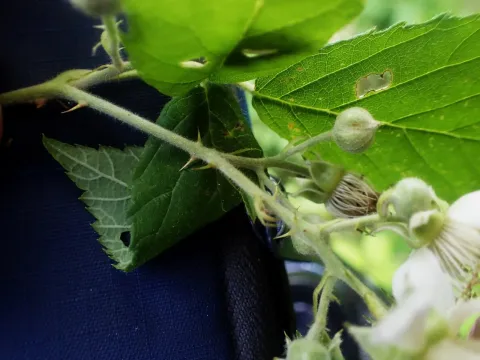
Large-leaved blackberry
Rubus macrophyllus
The large-leaved blackberry (Rubus macrophyllus) is a perennial shrub belonging to the Rosaceae family. It is recognized for its vigorous growth habit and distinct broad leaves, native to various regions in Western and Central Europe.
What the section contains
Large-leaved blackberry
This crop thrives in moderate climates and prefers sites with fertile, well-draining soils. While it can adapt to various conditions, it performs best in soils with a neutral to slightly acidic pH, rich in organic matter.
Adequate sunlight exposure is crucial for the development of the canes and fruit quality. Farmers should ensure proper spacing between plants to facilitate air circulation and minimize the risk of humidity-related fungal issues.
Agricultural management requires regular pruning to maintain the plant structure and improve yield. Installing trellises or support systems is highly recommended for commercial production to maximize efficiency during harvest.
Consistent soil moisture management is vital, especially during the fruit-set stage. Using organic mulch around the base of the bushes helps retain moisture, suppresses weeds, and maintains soil structure over time.
Common diseases affecting this species include rust, mildew, and cane blight. Implementing a robust sanitation program, which includes the removal of dead or diseased wood, is essential for maintaining plant health.
Pests like the blackberry mite and various aphid species pose a threat to both foliage and fruit. Integrated pest management strategies, focusing on biological controls and regular monitoring, are preferred.
Proper ventilation within the crop canopy significantly reduces the occurrence of fungal pathogens. Avoiding overhead irrigation can also prevent water-borne spores from spreading across the leaves.
Monitoring for signs of root rot is important, especially in regions with heavy precipitation. Good drainage design is the primary defense against soil-borne diseases that can weaken the root system.
Chemical control should be used as a last resort, strictly adhering to the safety periods before harvest to ensure the final product meets all food safety standards and quality requirements.