
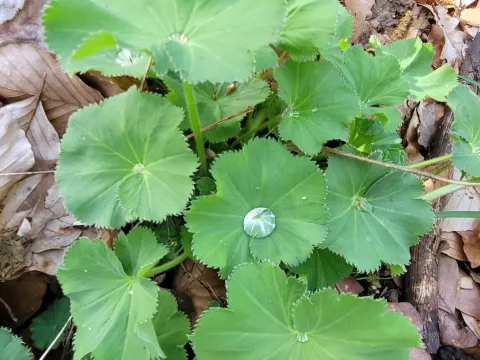
Lady's-mantle
Alchemilla mollis
Lady's-mantle is typically propagated by sowing seeds in late autumn or early spring, as they require a period of cold stratification to germinate successfully.
What the section contains
Lady's-mantle
For container-grown seedlings, seeds should be sown in early spring in well-draining seed-starting mix, maintained at a steady temperature of around 20°C.
Division is the most reliable method for established gardens, performed in spring or autumn by lifting the clump and dividing it into smaller sections.
When planting, ensure each section has enough roots to establish quickly in the new location within the garden bed.
Adequate spacing, usually about 30–40 cm between plants, is essential to allow the plant to spread naturally while maintaining good air circulation.
A member of the Rosaceae family, Alchemilla mollis is a highly adaptable perennial that thrives in diverse environments.
While it prefers full sun for optimal flower production, it is remarkably shade-tolerant, making it an excellent choice for woodland edges or underplanting.
The ideal soil is rich in organic matter, moist, and well-drained, though the plant is known for its ability to cope with less than perfect conditions.
It is fully hardy, showing resilience against harsh winter temperatures without needing protection, provided the soil drainage is adequate.
Regular maintenance involves keeping the soil consistently moist during the summer and removing dead foliage to encourage healthy new growth.
Alchemilla mollis is generally pest and disease-resistant, though it may occasionally be susceptible to powdery mildew during humid spells.
Root rot can occur in poorly drained, waterlogged soils, which may lead to the rapid decline of the plant clump.
Slugs and snails can be problematic, especially in cool, damp seasons, as they tend to feed on the foliage of young or overcrowded plants.
Managing the plant density and ensuring good air circulation is the best preventive measure against most common fungal issues.
In cases of severe infestation, removing the damaged leaves and improving garden hygiene typically resolves the issue without chemicals.
The harvest of lady's-mantle for therapeutic uses is best performed during the flowering period when the active compounds are most concentrated.
Stems should be cut cleanly and dried in a cool, dark, and well-ventilated area to preserve the quality of the plant material.
For ornamental purposes, removing faded flowers prevents self-seeding and keeps the plant looking neat throughout the growing season.
This species is highly valued as a ground cover, effectively suppressing weeds and minimizing soil erosion in gardens.
Dried leaves and flowers are also popular in the craft and dried-floral industry, offering a subtle, delicate appearance to arrangements.