
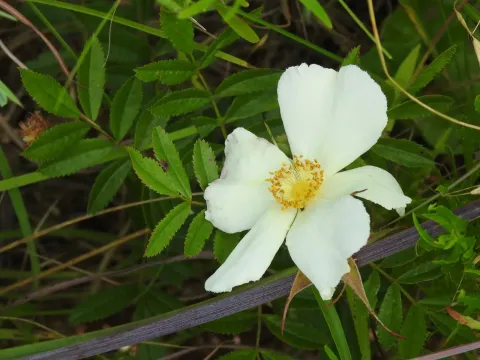
Leafy rose
Rosa foliolosa
The leafy rose (Rosa foliolosa) is a compact shrub belonging to the Rosaceae family. Native to the central United States, particularly Texas and Oklahoma, this species is well-known for its graceful appearance and natural ability to thrive in sunny, open habitats.
What the section contains
Leafy rose
Cultivation requires well-drained soil with a neutral to slightly alkaline pH. Given its natural affinity for limestone-based substrates, it performs best in soils that are aerated and not prone to waterlogging, as the roots are sensitive to excess moisture.
Exposure to direct sunlight is essential for the healthy growth of Rosa foliolosa. Providing at least six to eight hours of full sun per day ensures strong stem development and encourages a prolific blooming cycle throughout the summer months.
Maintenance of the growing area includes keeping the base of the shrub free from weeds and competing grasses. Mulching with organic matter helps retain soil moisture during peak heat, provided the mulch is kept a short distance away from the main stems.
Fertilization should be handled with care. A balanced, slow-release fertilizer applied in early spring is usually sufficient to support growth without causing overly lush, succulent foliage that might become susceptible to mechanical damage or environmental stress.
While the leafy rose is relatively hardy, it can be prone to black spot in high-humidity climates. Ensuring proper spacing between plants is the primary strategy for maintaining good air circulation and reducing fungal risks.
Powdery mildew is another common concern that manifests during warm, stagnant days. Preventive treatments using horticultural oils or specialized fungicides are recommended if early signs of white fungal growth appear on the leaves.
Aphids are frequent visitors to the new, tender growth in springtime. Managing these pests early prevents stunted leaf development and protects the plant from secondary infections caused by honeydew buildup.
Spider mites can become problematic during hot, dry spells. Regular inspection of the undersides of the leaves is advised, and using a strong water spray can often dislodge populations without the need for chemical intervention.
Consistent pruning of old or diseased wood is vital for plant longevity. Keeping the center of the shrub open helps manage the overall structure and reinforces the plant's resistance against common rose-specific pests.