
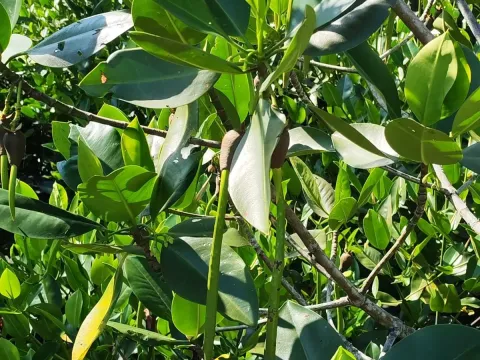
Asiatic mangrove
Rhizophora mucronata
The Asiatic mangrove, known botanically as Rhizophora mucronata, is a key species within the Rhizophoraceae family. It is widely distributed across the Indo-Pacific, dominating intertidal zones and serving as a crucial barrier against coastal erosion.
What the section contains
Asiatic mangrove
This species is characterized by its distinct stilt roots that lift the main trunk above the water level, allowing the plant to exchange gases in anaerobic, waterlogged mud. Its foliage is evergreen, providing a constant canopy that supports diverse aquatic life.
Cultivation of this mangrove requires specific environmental parameters, primarily tropical temperatures and nutrient-rich, fine-grained mud. The species thrives in areas with regular tidal inundation, which brings necessary minerals and flushes out accumulated salts.
Economically, the plant is highly valued for its durable wood, which is utilized for construction, charcoal production, and traditional medicine. Its bark is a significant source of tannins, which are used in the leather industry and for dye production.
Propagation is facilitated by viviparous seeds that develop into long propagules while still attached to the parent tree. Once mature, these propagules drop into the sediment and take root, a process that is highly effective for natural regeneration and reforestation efforts.
The primary threats include habitat destruction due to large-scale coastal development and the conversion of mangrove forests into shrimp ponds. Rising sea levels also pose a long-term risk if sedimentation rates cannot keep pace with water level increases.
Common pests include wood-boring organisms that can infest the stilt roots, potentially leading to instability during storm events. Furthermore, chemical pollutants and oil spills in coastal waters cause severe physiological stress and mortality among mangrove seedlings.