
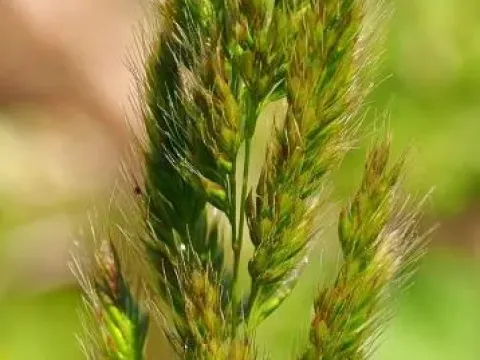
Rice barnyard grass
Echinochloa phyllopogon
Rice barnyard grass is categorized as an early spring weed that emerges simultaneously with the main crop — rice. Optimal conditions for its germination occur at soil temperatures ranging from +12°C to +15°C at a depth of up to 5 centimeters.
What the section contains
Rice barnyard grass
The seeds of this species possess high germination energy, allowing the weed to outpace the development of rice seedlings. Mass emergence is typically recorded once stable warm weather arrives, which is why rice sowing dates must be synchronized with the field's phytosanitary status.
In paddy systems, the seeds can germinate even through a thin layer of water, making population management particularly difficult. Deep burial in silt slows down their development but does not guarantee the plant's demise.
Agronomists recommend performing provocative irrigation before the main sowing to stimulate weed emergence. This allows for the destruction of the first wave of barnyard grass mechanically or chemically before the rice crop emerges.
The timing of emergence is critical for designing a herbicide application strategy, as the plant is most vulnerable to chemical agents during its early growth stages.
Rice barnyard grass is a typical hydrophyte belonging to the Poaceae family, perfectly adapted to the conditions of flooded fields. It thrives in fertile, well-moistened soils with high nitrogen content.
The plant demonstrates exceptional resilience to waterlogging, making it a dangerous competitor for rice in irrigated farming systems. It can grow effectively in both constant flooding conditions and moderate soil moisture.
The optimal temperature range for active vegetation is between +25°C and +30°C. Under these conditions, the weed rapidly accumulates biomass, suppressing crop growth by aggressively absorbing soil nutrients.
Soil structure is secondary to the species, though it performs best on silty and heavy clay-loam soils. A high demand for light forces the grass to compete with rice for direct sunlight by actively branching and tillering.
Effective suppression requires precise water level management, as young plants struggle with deep flooding during specific phases of their development.
In agricultural production, rice barnyard grass is considered an extremely aggressive weed that causes direct economic loss. Due to its morphological similarity to rice during the seedling stage, it is often difficult to identify in time.
Its high competitiveness leads to significant yield reductions, with losses sometimes reaching 30–50% in heavily infested areas. The weed consumes a large portion of mineral fertilizers intended for the rice crop.
The biological productivity of the weed is remarkably high: a single plant can produce up to 40,000 seeds that remain viable in the soil for several years. This turns its control into a long-term challenge.
While modern systemic herbicides help manage the population, constant selection pressure leads to the emergence of resistant biotypes. This requires farms to alternate active ingredients in their protection programs.
The economic utility of the grass as a fodder crop is limited by its status as a noxious weed, although its biomass may provide some nutritional value before it reaches the flowering stage.
The primary threat to the crop is not just the weed itself, but its ability to create a favorable environment for pathogens. Dense thickets disrupt airflow, increasing humidity within the rice canopy.
This triggers the development of fungal diseases such as blast and helminthosporiosis, which can spread from the weed to the rice crop. Controlling infections in infested fields is significantly more complex.
Among the pests that multiply on this weed are rice water weevils and various leafhoppers. The grass acts as a reservoir, providing food for these pests when the primary crop is not available.
Mechanical root disturbance during weeding often damages the roots of the rice plants. Consequently, selective herbicides targeting grass weeds remain the preferred method of control.
- Rice blast (Pyricularia oryzae).
- Helminthosporium blight.
- Stem-boring insect infestations.
- Reduced effectiveness of fungicide treatments.
- Severe competition for nutrients and sunlight.
Harvesting fields infested with barnyard grass requires pre-harvest desiccation or effective chemical control. The presence of living weed biomass at the time of harvest complicates combine operations.
Green weed material increases grain moisture, leading to additional energy costs for drying and cleaning. Weed seeds are often similar in size to rice grains, complicating the separation process.
Timely destruction of the weed before it sets seed is a key success factor. If the grass manages to shed seeds, the soil seed bank increases, complicating future cultivation seasons.
High-standard farming operations implement integrated systems, including crop rotation and the use of cover crops to suppress weed populations.
Final seed cleaning requires modern optical sorters, as standard sieve cleaners do not always guarantee the removal of barnyard grass seeds from the harvest batch.