
Rhizophora apiculata
Rhizophora apiculata
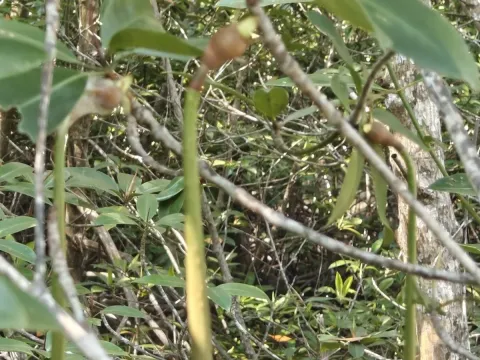
Rhizophora apiculata exhibits vivipary, a biological trait where seeds germinate while still attached to the parent tree, producing propagules ready for immediate planting.
What the section contains
Rhizophora apiculata
Harvesting of these propagules is performed manually once they reach a length of 25–40 cm, which is the optimal size for ensuring successful establishment in tidal mud.
Planting is achieved by inserting the lower end of the propagule into the soft, nutrient-rich intertidal sediment, often during the low tide window.
The ideal season for planting is the start of the rainy season, as the increased freshwater influx helps to stabilize the salinity levels required for early root development.
In restoration projects, bamboo stakes or protective mesh tubes are often employed to secure the propagules against tidal currents and debris during their first months.
As a member of the Rhizophoraceae family, this species requires specific tropical conditions, primarily thriving in intertidal zones of sheltered coastal areas.
The species is an obligate halophyte, showing high tolerance to varying levels of salinity; it prefers estuaries where freshwater mixing facilitates rapid biomass accumulation.
Soil requirements include deep, anaerobic mud or silt deposits, where the tree’s iconic stilt roots facilitate essential gas exchange despite the lack of soil oxygen.
A consistent tropical temperature regime is mandatory, as this species lacks cold hardiness and requires stable thermal conditions to maintain active metabolic functions.
Optimal light exposure is necessary for photosynthesis; therefore, the cultivation sites must be clear of canopy overlap from other high-growing mangrove species.
The primary economic output of Rhizophora apiculata is its dense, hard wood, which is globally recognized as the source for the highest quality charcoal production.
In managed silvicultural systems, the rotation period for sustainable harvesting typically ranges from 20 to 30 years to allow trees to reach commercial maturity.
Yield capacity can reach 150–200 cubic meters of wood per hectare, provided that maintenance and thinning practices are executed according to scientific guidelines.
Beyond timber, these forests serve as nursery grounds for crustacean and fish farming, significantly contributing to the integrated income of coastal agricultural communities.
Carbon sequestration rates in Rhizophora forests are exceptionally high, making them valuable assets in modern carbon credit markets and climate mitigation strategies.
Crabs, particularly from the family Grapsidae, constitute a significant threat as they feed on fallen propagules and young seedlings, severely limiting natural regeneration.
Weevils are recognized as primary insect pests, capable of damaging the bark and vascular tissues of the tree, which can lead to localized necrosis and wood degradation.
Fungal pathogens causing leaf spot and root rot are common in areas with poor hydrological circulation or where water remains stagnant for extended periods.
Oil spills and chemical waste contamination are fatal to this species because they physically block the lenticels on the stilt roots, resulting in respiratory failure.
Climate change-induced sea-level rise represents a major long-term threat, as it can overwhelm the species if the rate of submersion exceeds its ability to trap sediment.