
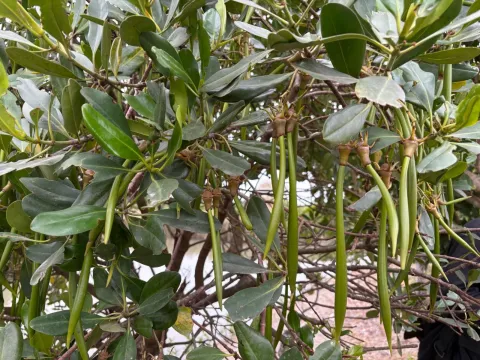
Kandelia
Kandelia
Kandelia is a genus of mangrove trees belonging to the family Rhizophoraceae. These plants are uniquely adapted to intertidal zones in tropical and subtropical regions of Asia, playing a vital role in coastal stabilization and biodiversity support.
What the section contains


Kandelia
The culture requires specific environmental conditions including tidal inundation and saline mudflats. Unlike many terrestrial plants, Kandelia thrives in anoxic, waterlogged soils by developing specialized root structures that assist in gas exchange during low tide.
One of the most fascinating botanical features of Kandelia is its viviparous reproduction. The embryo develops into a propagule while still attached to the parent tree, providing it with the necessary energy reserves to survive after falling into the water and taking root.
Regarding climate, Kandelia demands high humidity and temperatures that do not drop below freezing point. The species is highly sensitive to frost, which significantly limits its distribution to frost-free coastal areas where the tidal influence is consistent.
Economically, Kandelia is primarily managed for environmental conservation and ecosystem services. The restoration of Kandelia forests helps protect shorelines from erosion, provides habitats for marine organisms, and helps sequester atmospheric carbon dioxide.
The primary threats to Kandelia habitats include rising sea levels, industrial pollution of estuaries, and coastal development that disrupts the natural tidal flow essential for the tree's health.
Common biological threats include various fungal pathogens that thrive in stagnant water conditions and infestations by wood-boring insects that target the root systems, often leading to the structural weakening of mature trees.