
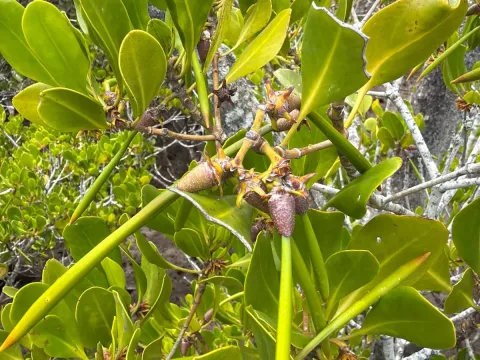
Ceriops
Ceriops
Ceriops is a significant genus of mangrove trees belonging to the Rhizophoraceae family, widely distributed across the tropical and subtropical regions of the Indian and Pacific Oceans. These trees are highly specialized to thrive in tidal zones where they interact with saline substrates and frequent inundation.
What the section contains


Ceriops
The successful cultivation of Ceriops requires a warm, tropical climate characterized by high humidity and consistent temperatures throughout the year. They prefer deep, soft mudflats rich in organic matter, which provide the necessary anchorage for their complex root structures in shifting, waterlogged soils.
Botanically, Ceriops is recognized by its distinct prop roots that provide structural support and facilitate gaseous exchange in the hypoxic environment of the intertidal zone. These adaptations are crucial for the tree's survival in conditions that would be lethal to most terrestrial plant species.
The species possesses advanced physiological mechanisms to manage salt levels, filtering excess salinity through its root system and accumulating it in leaves before shedding them. This salt tolerance allows Ceriops to dominate certain sections of the mangrove forest, often forming dense, uniform stands.
In conservation forestry, the management of Ceriops focuses on maintaining the hydrological integrity of coastal areas. Proper site selection for reforestation projects involves analyzing tidal patterns and sediment composition to ensure that young propagules have the best chance to establish themselves.
The timber of Ceriops is highly valued for its extreme hardness, density, and natural resistance to decay and marine wood-boring organisms. These qualities make it an essential material for traditional construction in mangrove-dependent communities, specifically for heavy-duty structural posts and piers.
The bark of Ceriops is rich in tannins, which has historically supported local leather-tanning industries and the production of dyes. These products have sustained the socio-economic activities of coastal populations while integrating traditional forestry practices with the needs of the modern market.
Sustainable harvesting of Ceriops involves careful monitoring of forest density and health. Selective logging practices are implemented to ensure that the ecological functions of the mangrove ecosystem, such as shoreline protection and carbon sequestration, remain uncompromised after timber extraction.
For restoration purposes, the collection of mature propagules is timed with the natural dispersal phase. These propagules are then planted in areas vulnerable to erosion, where they help to consolidate soil and dissipate wave energy, significantly enhancing the resilience of the local coastline.
Research into the biochemical properties of Ceriops extracts continues to explore potential applications in medicine. While traditional practitioners use plant parts as antiseptic or soothing agents, ongoing scientific studies are evaluating these compounds for modern pharmaceutical development.
The most pressing threat to Ceriops populations is the rising sea level associated with climate change, which can force trees into deeper water where their root systems struggle to receive oxygen. This displacement often leads to forest decline and the loss of critical habitat for aquatic life.
Pollution, particularly oil spills and chemical runoff from inland agriculture, poses a severe danger to the health of mangrove forests. Toxins can clog the lenticels on roots, effectively suffocating the tree and making it highly susceptible to secondary infections or environmental stress.
Biological threats include various insects and mollusks that specialize in attacking mangrove wood. While healthy trees can often withstand minor infestations, weakened stands are prone to catastrophic damage, especially when combined with the physical stress of frequent tidal surges or storms.
Invasive species can become a problem in degraded or recovering forest sites by outcompeting young Ceriops seedlings for nutrients and light. Adaptive management strategies often include weeding and site maintenance to ensure that the native mangroves remain the dominant species in the ecosystem.
Extreme weather events such as intense tropical cyclones represent significant physical risks, causing widespread defoliation and uprooting of trees. Building natural buffer zones and protecting existing stands are key strategies to mitigate the impact of these events on coastal stability.