
Berchemia
Berchemia
Berchemia is a genus of woody climbers and shrubs belonging to the Rhamnaceae family, widely distributed across subtropical and tropical Asia and North America.
What the section contains


Berchemia
The plant thrives in warm, humid climates, requiring a sheltered position in the landscape to protect its foliage from intense winds and extreme cold.
Successful cultivation depends heavily on soil quality; the plant requires well-drained, nutrient-rich soil to prevent root issues during the growth cycle.
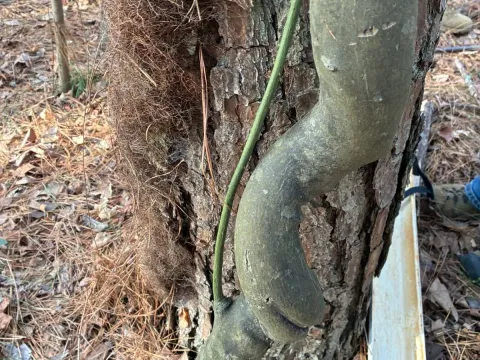
Botanically, it is known for its fast-growing, twining stems and characteristic leaves with prominent veins, making it an excellent choice for vertical structural coverage.
In terms of usage, it is primarily utilized as an ornamental plant for trellises, arbors, and other vertical elements, as well as for its historical medicinal properties.
Common plant health threats include fungal infections that manifest as leaf spots or stem decay if the plant is grown in overly damp conditions.
Pests such as spider mites and scale insects can become a concern, particularly in greenhouse environments or during periods of low humidity.
Effective management strategies focus on monitoring plant health regularly and ensuring that the foliage stays dry to minimize fungal spore germination.
Pruning is an essential maintenance task that helps manage plant size while removing dead or diseased wood that could attract harmful pathogens.
Maintaining soil pH balance and balanced fertilization helps reinforce the plant's natural resistance to environmental stress and secondary pest infestations.