
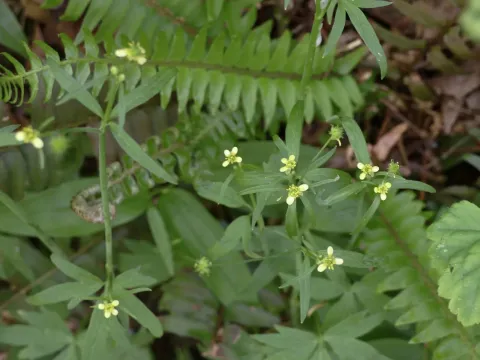
Little buttercup
Ranunculus uncinatus
Little buttercup (Ranunculus uncinatus) is a perennial herbaceous plant belonging to the Ranunculaceae family. It is typically found in moist, shaded environments, including coniferous forests, woodland margins, and damp riparian zones throughout North America.
What the section contains
Little buttercup
The species thrives in rich, well-drained but consistently moist soils. It has a specific adaptation to shaded areas, meaning it does not perform well in direct, intense sunlight, which can lead to leaf scorching and rapid moisture loss in the soil.
Climatic requirements for Ranunculus uncinatus are centered around moderate temperatures. It prefers cool to mild conditions where the humidity levels remain sufficiently high throughout the spring and summer growth phases.
Morphologically, the plant is characterized by its distinct hooked achenes, which facilitate dispersal by sticking to the fur of animals. This evolutionary trait ensures the survival and spread of the species across its natural forest range.
Agronomically, if one were to manage this species, it is crucial to simulate its native habitat conditions. Maintaining soil structure is paramount, as the plant relies on organic matter content to provide the necessary nutrients for its development.
The plant contains protoanemonin, a natural toxin that serves as a robust defense mechanism against herbivores and most common garden pests. Because of this, it is rarely bothered by insects that typically infest other ornamental or agricultural plants.
Fungal pathogens represent the most significant threat to the health of little buttercup. Conditions characterized by stagnant air, high humidity, and lack of drainage create the perfect environment for powdery mildew and various forms of leaf spots.
Root rot is another concern, particularly in poorly drained soils. Over-watering during cooler periods can lead to waterlogged root zones, causing systemic decay and the eventual death of the plant population.
Competition from invasive species can also suppress the growth of this native buttercup. If left unmanaged, more aggressive weeds may outcompete the little buttercup for space and soil nutrients, leading to a decline in population density.
Environmental stress, such as prolonged drought or extreme temperature fluctuations, can compromise the plant's resistance to minor opportunistic pests, making regular monitoring of the local ecosystem essential for long-term health.