
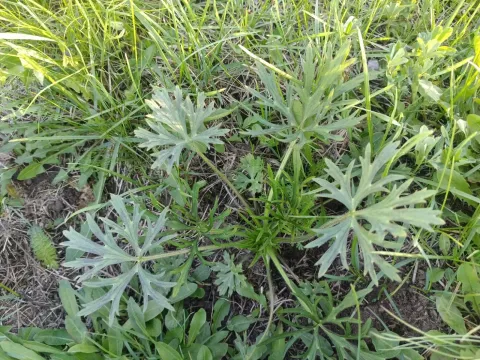
Many-flowered buttercup
Ranunculus polyanthemos
The many-flowered buttercup (Ranunculus polyanthemos) is a perennial herbaceous plant belonging to the Ranunculaceae family. It is typically classified as a weed species, often appearing in meadows, pastures, and moist soil environments throughout Europe and Asia.
What the section contains
Many-flowered buttercup
The plant thrives in regions with temperate climates and is highly adaptive to various soil types, ranging from loams to moisture-retaining organic soils. It is particularly prevalent in areas with high water tables or in regions affected by spring flooding.
Botanically, it is distinguished by a branching stem that can reach up to 80 centimeters in height. Its palmate-divided leaves and brilliant yellow flowers make it easily identifiable during the late spring and summer months.
In terms of environmental requirements, the plant prefers neutral to slightly alkaline soil pH levels. It exhibits significant frost tolerance and can successfully survive in harsh northern climates while maintaining its vigor through the growing season.
From an agricultural standpoint, it is primarily viewed as a contaminant. Due to its chemical properties, it can be harmful to livestock if ingested in significant quantities, as the presence of protoanemonin makes the fresh plant toxic to many animals.
The many-flowered buttercup is susceptible to various invertebrate herbivores, including certain species of leaf-eating beetles and moth larvae, which can limit its growth rate and reproduction in wild habitats.
Fungal pathogens such as powdery mildew represent a significant threat to the plant's health. High humidity and poor air circulation in dense vegetation allow these diseases to spread rapidly across populations.
Effective management focuses on preventing seed production. Regular mowing of meadows before the flowering stage is the most traditional and effective method to suppress the spread of this perennial weed.
Integrated weed management also suggests soil improvement techniques. Improving drainage in waterlogged fields is a critical step, as the plant relies on consistent moisture levels to outcompete desired forage crops.
Chemical control via selective herbicides is possible but should be used carefully to prevent damage to the surrounding pasture grasses. Rotation of crops and proper pasture management are recommended for long-term control.