
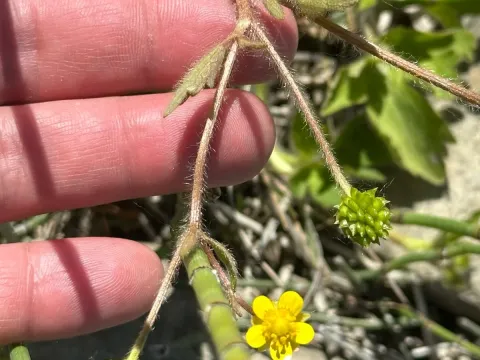
Macoun's buttercup
Ranunculus macounii
Macoun's buttercup (Ranunculus macounii) is a perennial herbaceous plant belonging to the Ranunculaceae family. It is a distinct species found primarily in wet habitats across the North American continent, particularly in Canada and the northern parts of the United States.
What the section contains
Macoun's buttercup
The plant typically grows in moist soil conditions, such as riverbanks, wet meadows, and shaded forest margins. It thrives in temperate zones where water availability remains high throughout the primary growing season.
Regarding soil requirements, Macoun's buttercup prefers rich, loamy, or organic-heavy substrates that retain moisture well. It does not tolerate prolonged drought and requires consistent hydration for optimal development.
Botanically, the species is characterized by its sprawling or erect stems and deeply lobed leaves. The flowers are small, yellow, and typical of the Ranunculus genus, appearing on the plant during the spring and early summer months.
Its growth habit is aggressive in favorable ecological niches, often forming dense colonies. The plant relies on moist conditions to complete its life cycle and effectively produce viable seeds for further propagation.
Major threats to this plant include fungal pathogens such as powdery mildew, which can significantly damage foliage under high humidity and poor air circulation conditions. Root rot is another common risk.
Pest pressure comes primarily from leaf-eating beetles and various insect larvae that thrive in the same wet meadow habitats. Severe infestation can reduce the plant's overall vigor and capacity to reproduce.
Environmental disruption, particularly changes in the water table, poses a significant threat. If the soil dries out beyond a certain threshold, the plant suffers from dehydration and growth cessation.
Competition from aggressive invasive species can also threaten its survival in native habitats. Human land development that destroys wetlands and riverine ecosystems causes fragmentation of the plant's range.
Effective management in controlled settings involves monitoring soil drainage and maintaining consistent but not excessive moisture levels to minimize the risk of developing pathogenic infections.