
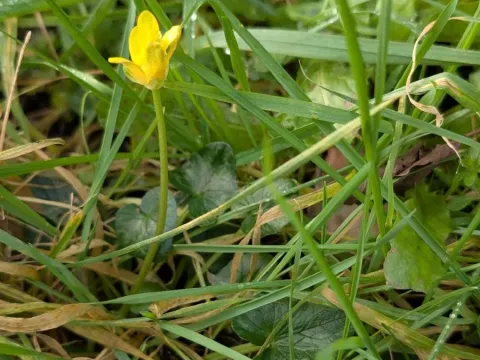
Lesser celandine
Ficaria
Lesser celandine (Ficaria verna) is a perennial herbaceous plant belonging to the Ranunculaceae family. It is widely recognized as a spring ephemeral that completes its lifecycle before the canopy fully closes.
What the section contains


Lesser celandine
Native to Europe, Western Asia, and North Africa, this species is highly adaptable to moist, shaded environments. It is frequently found in woodlands, along riverbanks, and in damp meadows where moisture levels remain consistent.
The plant is distinguished by its tuberous root system, which allows it to store energy and emerge rapidly as soon as temperatures rise. The leaves are typically cordate, and the flowers are glossy yellow, acting as an early nectar source.
The ideal growing conditions require rich, moist, and well-drained soil. It thrives in loamy substrates that do not dry out during its primary growth phase, making it highly dependent on the early spring climate.
Agronomic management involves observing its ephemeral nature. Since the foliage dies back by early summer, it is often treated as a seasonal cover or a decorative plant in managed landscapes that require early spring soil protection.
Common health issues for Ficaria verna include fungal infections such as powdery mildew or rust, particularly if the plant is grown in areas with poor air circulation or excessive humidity during the spring transition.
Pests that frequently target lesser celandine include slugs and snails, which can cause significant foliar damage. Integrated pest management strategies, such as physical barriers or biological controls, are often used to mitigate these risks in sensitive areas.