
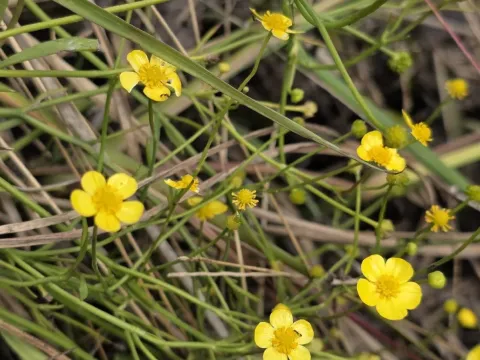
Lesser spearwort
Ranunculus flammula
Lesser spearwort (Ranunculus flammula) is a perennial herbaceous plant belonging to the Ranunculaceae family. In agricultural settings, it is recognized as a weed that thrives in wet environments and marshy fields.
What the section contains
Lesser spearwort
The plant originates from temperate regions across Europe and North America. It is typically found in habitats such as wet meadows, stream banks, and areas with poor drainage, where its presence signifies a high water table.
Botanically, it features creeping stems that root at the nodes, allowing for rapid colonization of damp soils. The leaves are narrow and lance-shaped, and the plant produces small, bright yellow flowers throughout the growing season.
Its environmental requirements include high soil moisture and acidic to neutral soil pH. It acts as a bio-indicator for wet ground; thus, improving soil drainage is the most effective cultural practice to suppress its growth in agricultural fields.
While historically used in traditional medicine for its antiseptic properties, Lesser spearwort contains protoanemonin, making it toxic to livestock. Grazing animals usually avoid it, but accidental ingestion can cause oral and digestive irritation.
The plant possesses a natural defense mechanism through its toxic compounds, which effectively deter most common fungal diseases and pests. This resilience allows it to compete aggressively with more desirable forage species.
There are no significant economic pests that target this species; in fact, the plant is often left untouched by insects that would otherwise decimate competing vegetation, giving it a competitive advantage in wetlands.
The main threat posed by Lesser spearwort is its impact on forage quality. In pastures, it can quickly become dominant, and its toxicity makes large areas unsuitable for safe grazing or hay harvesting.
Control strategies should focus on habitat modification, specifically by installing tile drainage to lower the water table. Reducing soil acidity through liming also creates a less favorable environment for its establishment.
For chemical management, targeted herbicide applications during the active growth phase are recommended. It is important to treat patches early to prevent further vegetative spread through creeping stems.