
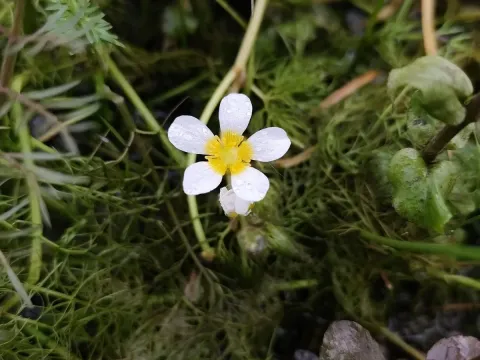
Thread-leaf water-crowfoot
Ranunculus trichophyllus
Ranunculus trichophyllus, commonly known as thread-leaf water-crowfoot, is a perennial aquatic herbaceous plant belonging to the Ranunculaceae family. Unlike terrestrial species, this hydrophyte is fully or partially submerged in water, preferring stagnant or slow-moving freshwater bodies with nutrient-rich substrates.
What the section contains
Thread-leaf water-crowfoot
The distribution range covers the temperate zones of the Northern Hemisphere, including regions in Europe, Asia, and North America. The plant is extremely sensitive to water purity and dissolved oxygen levels, often acting as a biological indicator for the ecological health of aquatic systems.
Botanically, the species is characterized by thin, finely divided leaves that take on a thread-like form in flowing water to minimize drag. The stems exhibit high elasticity, allowing them to adapt to fluctuations in water depth throughout the growing season.
For optimal development, water-crowfoot requires intense lighting and water temperatures ranging from 10 to 22 degrees Celsius. It is capable of absorbing nutrients directly from the aquatic environment through its leaf surfaces, making it a promising candidate for biological water purification processes.
While not a conventional agricultural crop in traditional field farming, it is utilized in specialized aquaculture to provide habitat for juvenile fish and as a biofilter in artificial ponds. The plant helps stabilize bottom sediments and prevents soil erosion along the shorelines of small water bodies.
The primary threats to Ranunculus trichophyllus populations include anthropogenic pollution from nitrogenous compounds and pesticides, which often leads to eutrophication. Under high nutrient concentrations, the plant struggles to compete with aggressive algal blooms.
Pests include various aquatic insects and mollusks that feed on the delicate leaf structures, disrupting the photosynthesis process. Additionally, pathogenic fungi may attack the root system during periods of severe water level drops and subsequent soil dehydration.