
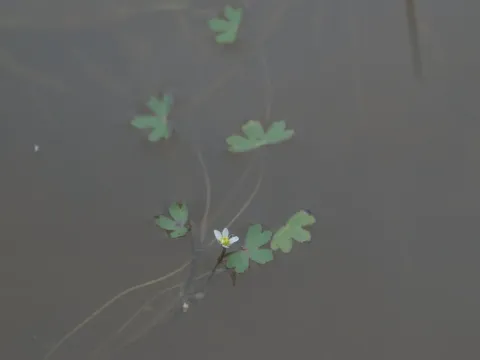
Three-lobed crowfoot
Ranunculus tripartitus
The Three-lobed crowfoot (Ranunculus tripartitus) is a perennial herbaceous plant belonging to the Ranunculaceae family. It is an amphibious plant, naturally adapted to ephemeral pools, shallow ponds, and muddy substrates that experience seasonal fluctuations in water levels.
What the section contains
Three-lobed crowfoot
The origin and primary distribution range of this species are centered in Western Europe, particularly in countries like the UK, France, and parts of the Iberian Peninsula. It thrives in oceanic climates where mild temperatures prevail throughout most of the year.
Botanically, the species is recognized for its heterophylly. It develops finely divided, hair-like submerged leaves that maximize surface area for aquatic respiration, contrasted with the broader, three-lobed leaves found on the surface of the water or on damp soil.
Regarding cultivation requirements, the species demands high water purity and low-nutrient substrates. It is extremely sensitive to eutrophication, which means it cannot survive in environments heavily treated with chemical fertilizers or industrial runoff.
Its economic or agricultural use is largely non-existent, as it is classified more as a botanical curiosity or a conservation indicator. It is highly valued in environmental science for monitoring the health of aquatic ecosystems and the stability of seasonal wetlands.
The primary threats to Ranunculus tripartitus involve habitat loss due to agricultural land improvement, such as drainage projects. Draining ephemeral ponds or wetlands directly destroys the specific niche required for its germination and growth cycle.
Diseases affecting the plant are typically opportunistic, such as fungal pathogens spreading in stagnant, over-enriched waters. Common pests include aquatic larvae and mollusks that graze on the foliage, although competition from invasive aquatic weeds often poses a greater threat to local extinction.