
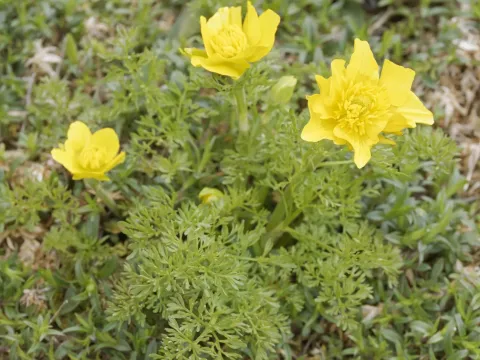
Thousand-leaved buttercup
Ranunculus millefoliatus
The Thousand-leaved buttercup (Ranunculus millefoliatus) is a perennial herbaceous plant belonging to the Ranunculaceae family. It is recognized for its unique foliage and distinct growth habit suited for Mediterranean climates.
What the section contains
Thousand-leaved buttercup
Originating from Southern Europe and the Mediterranean basin, this species thrives in open, sunny environments. It is naturally adapted to rocky slopes and meadows where drainage is excellent and competition from larger vegetation is minimal.
Cultivation requires specific soil conditions, prioritizing well-drained and slightly alkaline substrate. The plant does not tolerate waterlogging, which necessitates careful site selection in gardens or field nurseries.
Botanically, it is defined by its deeply dissected, feathery leaves that resemble those of the yarrow plant. The species typically enters a dormant phase during the hottest months of summer to conserve moisture and energy.
The primary use of Ranunculus millefoliatus is ornamental. It is highly valued by rock garden enthusiasts for its resilience and aesthetic appeal, making it a sustainable choice for xeriscaping or dry garden borders.
Common threats to this plant include fungal issues like powdery mildew, which can occur during high humidity periods with poor air circulation. Proper spacing and airflow are essential management tools to mitigate these risks.
Insect pests such as spider mites and aphids are known to feed on the foliage. Consistent monitoring during the spring growth flush is recommended to maintain plant health and prevent severe infestation levels.