
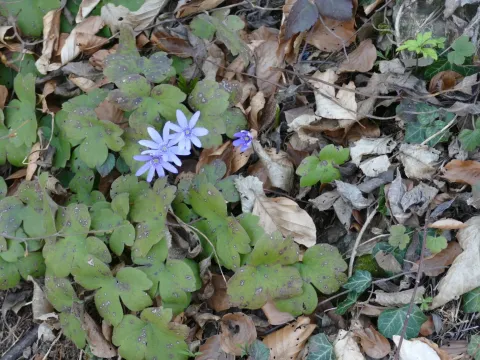
Transylvanian liverwort
Hepatica transsilvanica
Transylvanian liverwort (Hepatica transsilvanica) is a perennial herbaceous plant belonging to the Ranunculaceae family. Originating from the mountainous regions of Transylvania and the Carpathians, this species is well-adapted to cool, shaded forest environments with moist, nutrient-rich soils.
What the section contains
Transylvanian liverwort
Botanically, the plant forms a basal rosette of evergreen, leathery, three-lobed leaves. The root system consists of a sturdy, creeping rhizome that supports the development of large, showy blue-to-violet flowers, which typically emerge in early spring, often coinciding with the thawing of snow.
Cultivation requires sites that replicate its natural habitat: partial to full shade and humus-rich, well-draining soil with a neutral to slightly alkaline pH. It thrives particularly well under the canopy of deciduous trees, where natural leaf mulch contributes to the overall soil health and moisture retention.
Maintenance involves keeping the soil consistently moist, especially during the active flowering phase and the growth of new foliage. While the species is highly frost-hardy, the application of a thin layer of compost or leaf mulch in autumn helps to protect the surface roots and provides necessary nutrients for the coming season.
In landscaping, this species is prized for its extreme durability and early aesthetic contribution to shade gardens. It is frequently utilized in woodland settings, rockeries, and border plantings where it can establish itself as a permanent, long-lived feature without the need for frequent replanting.
The primary threats to Hepatica transsilvanica are related to poorly drained soils, which predispose the crown and rhizomes to fungal decay and rot. Ensuring an efficient drainage system is the most critical preventative measure against these lethal issues.
Foliage may occasionally be affected by various leaf spot fungi, especially in areas with poor air circulation or extended periods of high humidity. Regular sanitation, which includes removing dead leaves and debris, is essential to minimize the risk of infection spread.
Slugs and snails represent the most significant pest concern, as they feed on the succulent, emerging leaves and flower buds. Control methods often include the use of physical barriers or organic bait traps, especially during the moist conditions of the early spring growing season.
Pests such as spider mites may occur during hot, dry spells, causing the leaves to lose their healthy color and luster. Providing adequate hydration and keeping the surrounding air humid helps to discourage mite infestations throughout the summer months.
Effective management also relies on routine division of mature clumps every few years. This practice prevents the plant from becoming overly congested, which helps to maintain airflow and vigor, ultimately reducing the susceptibility of the colony to localized diseases.