
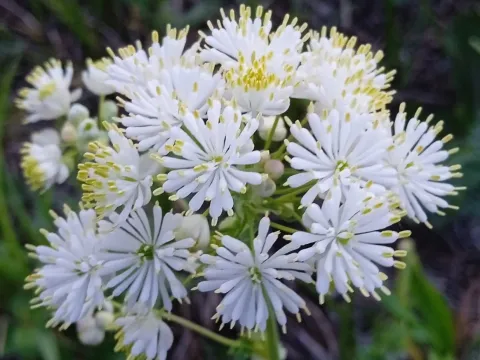
Thalictrum uncinatum
Thalictrum uncinatum
Thalictrum uncinatum, commonly known as hooked meadow-rue, belongs to the Ranunculaceae family. It is a perennial herbaceous plant valued for its fern-like foliage and airy, delicate flower clusters that add vertical interest to landscapes.
What the section contains
Thalictrum uncinatum
The plant thrives in sites that offer partial shade, particularly in climates with intense summer heat. While it can tolerate more sun in cooler regions, protecting it from the midday sun is essential to prevent leaf scorching.
Optimal growing conditions involve deep, moisture-retentive, and humus-rich soils. Ensuring excellent drainage is paramount, as the roots are sensitive to stagnant water which can lead to rapid decay during the dormant season.
Agronomic management requires consistent moisture during the growing season. Applying organic mulch, such as leaf mold or compost, helps to stabilize soil temperatures and retains the necessary humidity around the base of the plant.
It displays remarkable hardiness in temperate regions, making it a reliable perennial that survives harsh winters. The plant generally reaches its peak aesthetic appeal during the mid-to-late summer months when flowering occurs.
Leaf miners are among the most common insect pests that target the delicate leaves of Thalictrum. Their larvae create distinct tunnels, which can be managed by removing affected foliage early in the season.
Powdery mildew is a prevalent fungal issue, especially in environments with poor air circulation or high humidity levels. Increasing spacing between plants is the most effective cultural method to mitigate this threat.
Root rot, caused by pathogens like Phytophthora or Pythium, represents a major risk in waterlogged soils. Improving soil structure and avoiding excessive irrigation are critical preventative measures for a healthy garden.
Aphid infestations can occur during the vigorous growth phase, particularly in spring. Regular inspection of the underside of leaves and using mild insecticidal soaps can control these pests effectively.
Rust diseases might affect the plants in exceptionally humid summers, requiring the removal and destruction of infected material to prevent the spread of spores throughout the planting bed.