
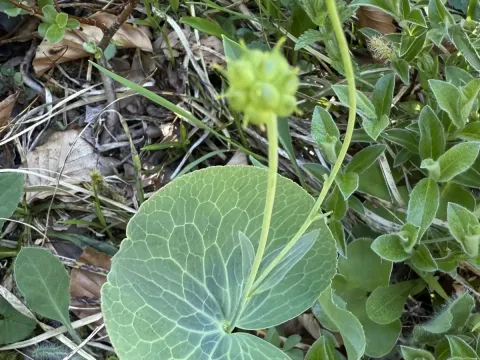
Thore's buttercup
Ranunculus thora
Thore's buttercup (Ranunculus thora) is a perennial herbaceous plant belonging to the Ranunculaceae family. It is not a conventional agricultural crop but serves as a subject of botanical interest and a valuable component of high-mountain alpine ecosystems.
What the section contains
Thore's buttercup
The plant originates from the mountainous regions of Europe, specifically the Alps and the Jura Mountains. It thrives in limestone-rich soils and rocky habitats where drainage is rapid and efficient, allowing the plant to withstand seasonal snow melt.
Climate requirements for this species are strict, necessitating the cool temperatures and clear light of the subalpine and alpine zones. The plant requires well-drained, alkaline soils to support its thick rhizome and prevent rot, making it a specialized grower.
Botanically, it is defined by its kidney-shaped leaves that wrap around the stem and its compact growth habit. The plant rarely exceeds 30 centimeters in height, which is an evolutionary adaptation to the harsh, wind-swept environment of its native range.
Economic use of Thore's buttercup is limited to horticultural collections and specialized rock gardens. Because the plant is toxic, it possesses no food or forage value and is strictly managed as a botanical specimen in conservation or research settings.
The primary threats to this plant are environmental degradation and the loss of its natural alpine habitats. Soil erosion caused by climate change or excessive human activity can easily destroy the fragile root systems of this small perennial.
Fungal diseases represent the most significant threat to its health, particularly in artificial settings where drainage is not strictly controlled. Root rot can occur rapidly if the plant is exposed to excessive moisture and lack of soil oxygen.
Pests, such as soil-dwelling larvae or leaf-eating insects, can damage the plant's ability to store nutrients in its rhizome. Proper monitoring of the plant's surrounding environment is essential for early detection and prevention of pest outbreaks.
Disease management focuses on preventive measures, such as providing sufficient airflow and using highly permeable soil substrates. Avoidance of chemical fertilizers is necessary, as the plant is adapted to nutrient-poor soil conditions.
Conservation of Thore's buttercup involves protecting its niche from invasive species that might compete for sunlight and nutrients. Any disturbance to the delicate ecological balance in its habitat poses a major risk to its long-term survival.