
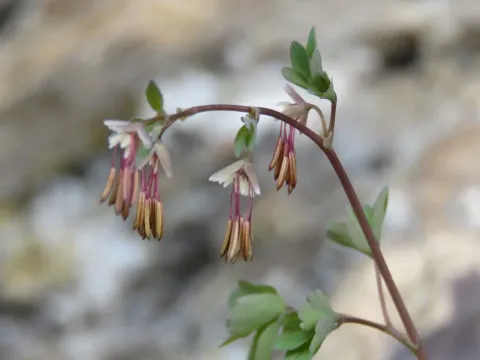
Thalictrum sultanabadense
Thalictrum sultanabadense
Thalictrum sultanabadense, commonly known as Sultanabad meadow-rue, belongs to the Ranunculaceae family. It is a perennial herbaceous plant native to the mountainous regions of Central Asia, specifically adapted to thrive in high-altitude environments with distinct seasonal changes.
What the section contains
Thalictrum sultanabadense
The plant performs best in nutrient-rich, well-draining loamy soils that maintain a neutral to slightly alkaline reaction. Ensuring effective drainage is crucial, as the root systems of these plants are susceptible to rot when subjected to prolonged waterlogging in heavy, compacted soils.
Regarding climate requirements, this species favors cool to temperate conditions. While it is quite hardy, it thrives when protected from extreme afternoon heat during the peak of summer, often preferring partial shade to maintain its metabolic health and foliage vigor.
Agronomic management requires keeping the planting area free from aggressive weeds, as Thalictrum species often struggle to compete with invasive grasses in their early growth stages. Regular mulching is recommended to retain soil moisture during the drier spring months.
Fertilization should be balanced, focusing on providing sufficient potassium and phosphorus to support the development of strong stems and flowers. Excessive nitrogen application should be avoided, as it leads to weak, floppy growth that is more prone to environmental damage.
The primary threats to this culture are fungal diseases, particularly downy mildew and leaf spots, which appear when ventilation is inadequate. Maintaining proper spacing between plants ensures air circulation, which is the most effective preventative measure against these pathogens.
In terms of insect pests, aphids and leaf miners represent the most significant challenges. Farmers should implement integrated pest management (IPM) strategies, utilizing predatory insects or targeted organic pesticides to manage populations without damaging the plant's natural balance.