
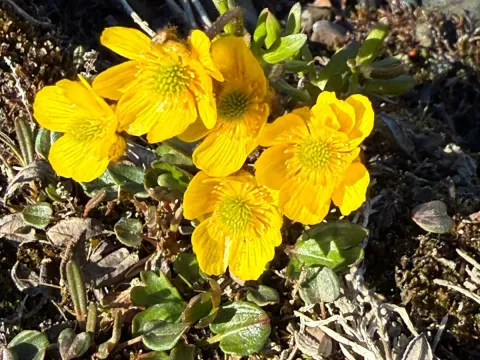
Sulphur buttercup
Ranunculus sulphureus
The sulphur buttercup (Ranunculus sulphureus) is a perennial herbaceous plant belonging to the Ranunculaceae family. It is a highly specialized plant adapted to the rigorous climates of the Arctic and high alpine zones.
What the section contains
Sulphur buttercup
Its natural distribution covers circumpolar regions across Eurasia and North America. It predominantly grows in moist tundra habitats, near melting snow patches, and along the banks of arctic streams where consistent soil moisture is maintained throughout the season.
Botanically, the plant is characterized by its compact stature, basal leaves, and distinct sulfur-yellow flowers often accompanied by dark, hairy sepals. Its physiology is tuned to complete its reproductive cycle within the very short arctic growing season.
The plant requires cool temperatures and high light intensity to thrive. It prefers well-drained, nutrient-rich soils with a slightly acidic or neutral pH, making it unsuitable for cultivation in warmer, temperate lowland regions.
In terms of agricultural and horticultural use, the species is primarily valued as a botanical subject and a potential candidate for specialized rock gardens. Its cold-hardy genetics are of interest to scientists studying plant adaptation to extreme northern environments.
The primary threats to Ranunculus sulphureus in the field involve fungal pathogens that thrive in cold, overly saturated soils. Root rot and mildew are common issues when drainage is compromised during the spring melt.
Insect pests include various larvae that inhabit alpine soils and may feed on roots or emerging buds. In some habitats, grazing animals can exert pressure on populations, although the plant's short stature often provides some level of natural protection.