
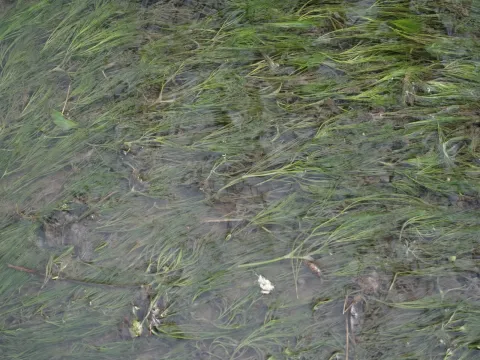
Stream water-crowfoot
Ranunculus penicillatus
Stream water-crowfoot (lat. Ranunculus penicillatus) is a perennial aquatic plant belonging to the Ranunculaceae family. It is an obligate hydrophyte that thrives in fast-flowing, clean, and well-oxygenated aquatic environments, such as rivers and streams.
What the section contains
Stream water-crowfoot
The plant is native to Europe, where it is frequently found in chalk streams and river systems. Its distribution is closely linked to specific hydrological conditions, requiring consistent water flow to maintain its growth pattern and oxygen supply.
Botanically, this species is characterized by long, slender stems and submerged leaves that are finely dissected into hair-like segments. This morphological adaptation reduces drag, allowing the plant to remain anchored while being fully submerged in strong currents.
The environmental requirements for this species are strict. It prefers gravel or sandy substrates and requires high water clarity. As a species, it is highly intolerant of eutrophication and nutrient enrichment, making it a critical bioindicator for river health.
In terms of ecological usage, it provides essential habitats for a variety of freshwater invertebrates and fish fry. While not a commercial crop in the traditional sense, it is often utilized in pond management and ecosystem restoration projects to maintain water quality.
The primary threats to Ranunculus penicillatus are agricultural runoff and excessive nutrient loading. High levels of nitrates and phosphates promote the growth of algae, which eventually smother the crowfoot and prevent necessary light penetration.
Pathogenic threats include water-borne fungal and bacterial diseases that flourish in stagnant or polluted water. Furthermore, sedimentation caused by bank erosion can bury the plant, preventing its photosynthesis and leading to rapid population decline.