
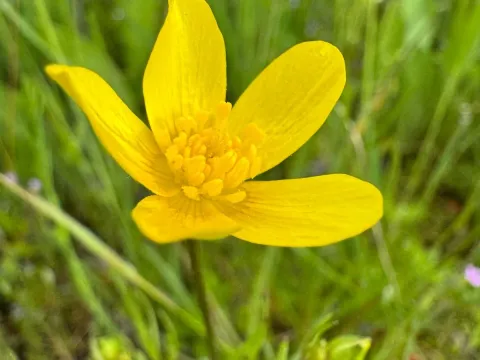
Straight-beak buttercup
Ranunculus orthorhynchus
The straight-beak buttercup (Ranunculus orthorhynchus) is a perennial herbaceous plant belonging to the Ranunculaceae family. It is native to the western regions of North America, where it thrives in moist meadows and wetlands.
What the section contains
Straight-beak buttercup
The species prefers nutrient-rich, moist soils that retain consistent humidity throughout the growing season. It performs best in areas where the water table is relatively high but drainage is sufficient to prevent root rot.
Climate-wise, it favors temperate conditions with mild summers and sufficient rainfall. The plant is highly adaptable to various light conditions, thriving in full sun to partial shade environments.
From an agrotechnical standpoint, careful soil management is required to maintain the necessary moisture levels without causing waterlogging. Weed control is essential during the early development stages of the plant.
Regarding its utility, the plant is not typically grown for forage due to its toxic nature when fresh. It serves primarily as a component of native flora, contributing to local biodiversity and soil stabilization in wetlands.
The primary threats include fungal diseases such as powdery mildew, which thrive in humid conditions and can affect plant vitality. Proper ventilation is key to minimizing this risk.
Insect pests such as aphids and leaf-eating beetles can damage the foliage. Regular monitoring is necessary to prevent significant infestation during the active growing season.
Management strategies emphasize cultural practices, such as maintaining appropriate spacing between plants to enhance air circulation and reduce microclimate humidity.
In cases of severe infestation or disease outbreak, targeted chemical intervention may be required, although biological controls are often preferred for such species.
It is crucial to handle plant residue carefully, especially if disease presence is detected, to prevent the persistence of pathogens in the field for subsequent seasons.