
Taiwan clematis
Clematis taiwaniana
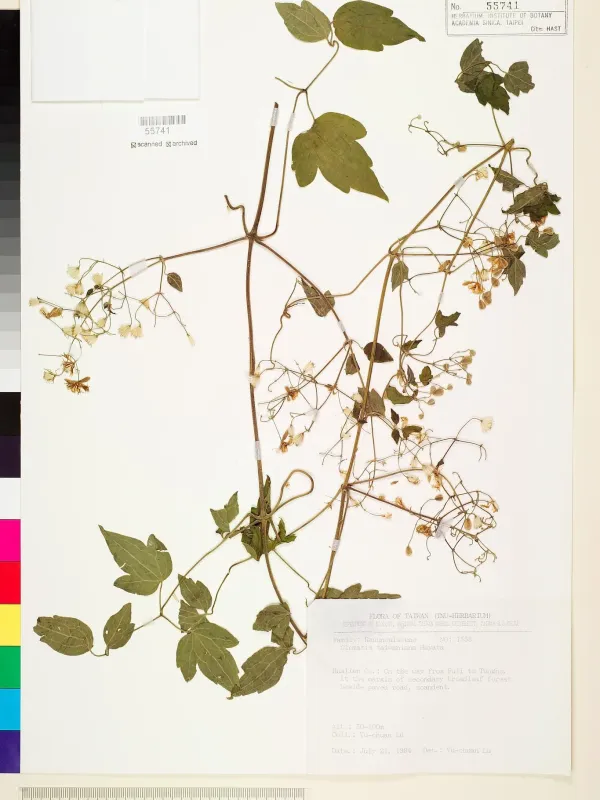
Description
Growing requirements
Taiwan clematis (Clematis taiwaniana) is a perennial woody or semi-woody vine belonging to the Ranunculaceae family. It is a rare species native to the mountainous regions of Taiwan, adapted to humid forest habitats.
The plant requires well-drained, humus-rich soil with a neutral to slightly acidic pH level. In cultivation, it is essential to ensure that the root system remains cool and shaded, while the climbing stems have access to filtered sunlight.
Climate requirements include protection from direct, scorching midday sun and strong winds. It thrives in regions with moderate temperatures and stable humidity levels, which simulate its natural mountain environment.
Good agricultural practice involves the installation of sturdy trellis systems, as the plant uses its petioles to climb vertical surfaces. Regular maintenance, including the removal of dead wood and light pruning, promotes vigorous growth during the spring season.
This species is primarily utilized for ornamental purposes in botanical gardens and private landscapes. It is favored by collectors of Asian flora who wish to create elegant vertical displays in shaded garden niches.
Main diseases and pests
The main pathological threat to this species is Clematis wilt, a fungal disease that can collapse the plant rapidly. Proper spacing to ensure airflow is the most effective preventative measure against such infections.
Common pests include spider mites and aphids, especially during prolonged heatwaves. Gardeners should monitor the foliage regularly and apply organic horticultural oils or insecticidal soaps at the first sign of infestation to maintain plant health.