
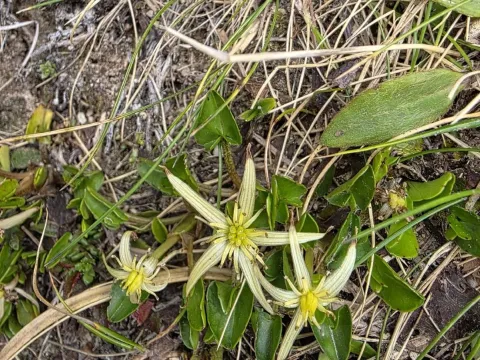
Marsh Marigold
Caltha
Propagation of the marsh marigold (Caltha) is primarily performed through the division of mature clumps, which is best done in early spring or late summer.
What the section contains
Marsh Marigold
Seed propagation is also viable but necessitates a cold stratification period of several months, as the seeds require specific environmental cues to break dormancy.
When sowing, it is crucial to maintain a constantly moist, nutrient-rich substrate, as the seeds are highly sensitive to moisture fluctuations during the germination phase.
Seedlings exhibit slow initial growth rates, meaning that cultivated specimens often require two to three seasons to reach full maturity and peak flowering capacity.
Spacing for new plantings should be maintained at 30-40 cm apart, ensuring sufficient space for the root systems to expand and stabilize within the damp soil environment.
The marsh marigold belongs to the Ranunculaceae family and is recognized as a hardy perennial plant native to temperate regions of the Northern Hemisphere.
Its fundamental requirement is a high-moisture environment, thriving exceptionally well in boggy soils, wetlands, and along the edges of permanent water bodies.
Caltha species prefer heavy, clay-rich, and slightly acidic to neutral soils that provide high fertility and consistent water retention throughout the growing season.
While the plant tolerates full sun, it is particularly well-adapted to partial shade, where the moisture levels of the soil remain more stable against evaporation.
The species is remarkably cold-hardy, capable of withstanding harsh winter temperatures without the need for specialized protective measures or winter coverings.
The primary utility of the marsh marigold is decorative, specifically in water gardening and landscaping for naturalizing pond margins and damp habitats.
Maintenance involves the removal of faded flowers after the blooming period to encourage foliage growth and prevent unwanted self-seeding in garden beds.
If transplanting is required, it should be conducted immediately after flowering to ensure the plant has ample time to establish itself before the onset of dormancy.
Caution must be exercised during handling, as all parts of the plant are mildly toxic due to the presence of protoanemonin; protective gloves are highly recommended.
Harvesting for floral arrangements is rarely done because the stems wilt rapidly; therefore, the plant is best left in situ to provide long-lasting seasonal color.
Common botanical threats include fungal diseases such as leaf spots and powdery mildew, particularly when plants are grown in overcrowded conditions with poor airflow.
Pest issues often involve infestations of aphids and spider mites, which can proliferate quickly, especially if the plants experience periodic drought stress.
Effective management requires regular monitoring of the underside of leaves for early signs of pest activity or pathogen colonization, allowing for rapid intervention.
Application of systemic fungicides or organic insecticides should be considered only when infestations threaten the overall health and aesthetics of the plant.
Cultural prevention, such as selecting optimal planting sites and ensuring appropriate plant spacing, remains the most effective defense against common diseases.