
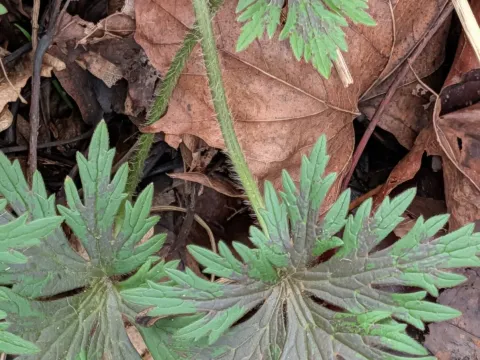
Meadow buttercup
Ranunculus acris
Meadow buttercup is a perennial herbaceous plant that reproduces both via seeds and vegetatively. The seeds require a period of stratification, typically occurring naturally during the winter months, to ensure optimal germination rates.
What the section contains
Meadow buttercup
When seeding in a controlled agricultural setting, it is recommended to sow seeds in late autumn. This timing allows the seeds to settle in the soil and prepare for early spring sprouting when the soil moisture is at its peak.
Seedlings develop a basal rosette of leaves quite rapidly. Establishing a strong root system within the first season is essential for the plant's ability to survive in various field conditions.
The sowing depth must be kept shallow, as small seeds have limited energy reserves. A depth of about 0.5 centimeters provides the best balance between protection from erosion and accessibility to surface sunlight.
Spacing should be managed to prevent overcrowding, as established buttercup plants expand their basal area significantly each season, potentially suppressing neighboring species if not controlled.
This plant thrives in moist, fertile soils. It is particularly well-adapted to loamy and clay-heavy soils, which are capable of retaining the moisture required for its metabolic processes throughout the growing season.
High levels of solar radiation promote vigorous flowering. While the meadow buttercup is moderately shade-tolerant, it will reach its maximum productivity and biomass production when exposed to full sun.
Water requirements are significant. As a plant naturally found in meadows and damp pastures, it suffers during prolonged dry spells, which can lead to senescence of the aerial parts.
It prefers a pH range that is slightly acidic to neutral. High levels of soil organic matter significantly improve the growth rate and overall health of the plant population.
Winter hardiness is one of the key strengths of this species. The plant remains dormant underground during the winter, protected by the soil layers, and initiates regrowth as soon as temperatures rise in the spring.
The most significant agricultural concern is its toxicity. Fresh meadow buttercup contains protoanemonin, which is irritating and potentially harmful to livestock if ingested in large quantities.
Fungal diseases such as powdery mildew can affect the foliage, especially in areas with stagnant air and high humidity. These diseases can reduce the overall yield of a pasture if left unmanaged.
While the plant's chemical compounds act as a natural defense against many insects, certain beetles and aphids can still cause localized damage to the leaves or stems.
On agricultural land, it is often classified as a weed when it begins to crowd out more desirable forage grasses. Maintaining a balanced grazing density is key to preventing its spread.
Effective management includes regular monitoring for disease outbreaks and manual removal or site-specific treatment in areas where the buttercup density exceeds thresholds for forage quality.