
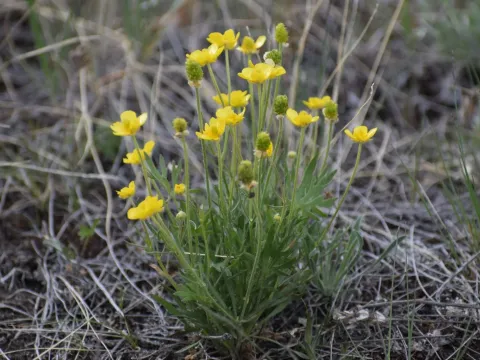
Northern buttercup
Ranunculus pedatifidus
The Northern buttercup (Ranunculus pedatifidus) is a perennial herbaceous plant belonging to the Ranunculaceae family. It is native to the arctic and alpine regions of North America and Eurasia, often found in meadows and rocky slopes.
What the section contains
Northern buttercup
This species is highly adapted to cold climates and short growing seasons. It requires well-drained, nutrient-rich soil to thrive, as it is highly sensitive to waterlogged conditions that can cause root rot.
The botanical structure consists of a basal rosette of deeply divided leaves and flowering stems ranging from 10 to 30 cm in height. These features are evolutionary adaptations to harsh winds and cold alpine environments.
Agricultural requirements for this plant focus on providing full sun exposure. It is a slow-growing species, making it suitable for specialized alpine gardens or naturalized restoration projects in cold climates.
While not a traditional agricultural crop for mass production, its ecological value is significant, as it contributes to the stabilization of mountain soils and supports local insect pollinators during the brief blooming period.
Common threats to the plant include fungal diseases such as powdery mildew, which often occur in environments with poor air circulation or excessive humidity during the summer months.
Pests such as spider mites and leaf miners can cause significant damage to the foliage, especially in greenhouse or garden settings where natural predators are absent.
Proper soil management, including the use of grit or sand for drainage, is essential to prevent the accumulation of moisture around the root collar, which is the primary site for disease onset.
It is important to note that the Northern buttercup, like many of its relatives, contains protoanemonin. This makes the plant toxic if ingested by livestock, limiting its role as a forage crop.
Integrated pest management should focus on cultural controls, as the plant's toxicity generally serves as a natural defense mechanism against many common herbivores.