
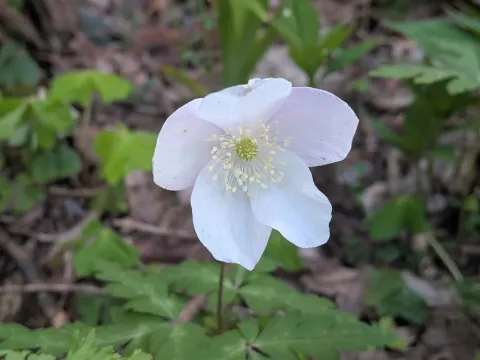
Niko anemone
Anemone nikoensis
Niko anemone (Anemone nikoensis) is a perennial herbaceous plant belonging to the Ranunculaceae family. Native to the mountain forests of Japan, this species is highly valued for its elegant, delicate appearance in woodland-style gardens.
What the section contains
Niko anemone
The plant grows from a horizontal rhizome, producing slender stems and deeply divided foliage. Its botanical uniqueness lies in the structure of its white flowers, which often display subtle lilac or pinkish hues on the reverse of the petals.
For optimal growth, the Niko anemone requires a location with partial shade or filtered light. It is sensitive to direct sunlight, which can easily damage its leaves and dry out the sensitive root zone prematurely.
Soil requirements focus on loose, well-draining structure rich in organic matter. A substrate based on leaf mold or forest soil with a neutral to slightly acidic pH is ideal for promoting healthy development.
Moisture management is critical; the soil must be kept consistently moist during the active growing season. However, it is essential to ensure that water does not stagnate, as the rhizomes are prone to rot in waterlogged conditions.
The primary threats to this culture are fungal diseases, particularly rhizome rot, which thrives in overly wet and poorly ventilated environments. Proper drainage remains the most effective preventive measure against these pathogens.
Slugs and snails are major pests, especially during the spring when tender young leaves emerge. Implementing physical barriers or organic pest control methods is necessary to prevent significant aesthetic damage to the foliage.
Soil-dwelling larvae can feed on the root system, potentially causing the entire plant to collapse. Regular soil monitoring and the use of targeted biological agents can mitigate the impact of such infestations.
Leaf spot diseases may occur during humid summers, necessitating the removal of affected leaves to ensure good air circulation. Maintaining garden hygiene by clearing debris is vital for the plant's health.
Protecting the plant from extreme temperature fluctuations during the dormant winter period is recommended. Applying a light layer of mulch helps insulate the rhizomes, ensuring they survive cold spells safely.