
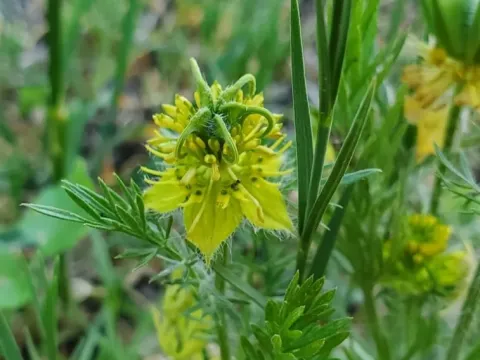
Nigella ciliaris
Nigella ciliaris
Nigella ciliaris is an annual herbaceous plant belonging to the Ranunculaceae family. It is typically sown in early spring when soil temperatures reach 8-10 degrees Celsius.
What the section contains
Nigella ciliaris
Seeds are sown in rows spaced 20-30 cm apart at a depth of 1.5-2 cm. This depth is optimal for ensuring soil moisture reaches the seed for uniform germination.
As a cold-hardy species, the seedlings can tolerate minor spring frosts, allowing for early planting to maximize the use of winter moisture.
Proper plant density is crucial for maximizing yield, as it prevents overcrowding and ensures that every plant receives sufficient light and air circulation.
Pre-sowing soil compaction is often recommended in lighter soils to ensure good contact between seeds and the soil, significantly accelerating the germination period.
This species requires full sun exposure to flourish. Shade will lead to etiolated stems and a reduction in the accumulation of essential oils within the seeds.
The plant performs best in well-drained, structured soils with a neutral or slightly alkaline pH. Waterlogged clay soils should be strictly avoided.
While having moderate drought tolerance, the plants require consistent soil moisture during the budding and flowering phases to produce high-quality seeds.
Regular weeding is essential throughout the growing season, as weed competition is a primary factor that can drastically reduce the overall yield potential.
Fertilization strategies should focus on phosphorus and potassium applications, as these nutrients support strong root development and high seed oil content.
The primary threats to the crop include fungal diseases such as root rot and powdery mildew, which thrive in conditions of high humidity and poor ventilation.
Pests such as aphids and spider mites frequently target the plant, feeding on sap and potentially spreading viral infections throughout the field.
Crop rotation is the most effective preventative measure against disease; it is advised not to replant Nigella on the same ground for at least 3-4 years.
Integrated pest management strategies are recommended, focusing on early monitoring and the use of eco-friendly biological control agents where possible.
Ensuring the field is free of weeds that serve as alternative hosts for pests is vital for maintaining healthy plant stands throughout the entire development cycle.