
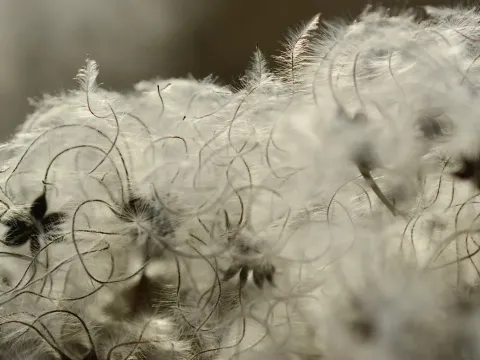
Old man's beard
Clematis vitalba
Propagation of Clematis vitalba is primarily achieved through seeds or vegetative cuttings. Seeds should be sown in autumn to allow for natural cold stratification during the winter months, which significantly improves germination rates in the following spring.
What the section contains
Old man's beard
When using nursery containers, maintain a constant moisture level in the substrate and provide light shade during the initial development stages. Seedlings typically exhibit vigorous growth and are ready for transplanting after one full season.
Vegetative propagation via semi-hardwood cuttings is highly effective for maintaining the desired physiological traits. Cuttings are taken in early summer and treated with rooting hormones before being placed in a humidified propagating bed.
Transplanting to the final location should be done in early spring, ensuring that the root ball is not disturbed. Adequate spacing, usually 1.5 to 2 meters, is essential to provide enough room for the vigorous stems to expand.
Adding organic compost during the planting process helps establish a strong root system. Ensure that the planting hole is deep enough to cover the base of the stem, encouraging the growth of additional shoots from the nodes.
Clematis vitalba, a member of the Ranunculaceae family, is a deciduous woody climber known for its rapid growth. It thrives in well-drained, fertile soils with a pH ranging from neutral to slightly alkaline, avoiding heavy clay substrates.
The plant demonstrates high adaptability regarding sunlight, growing best in full sun but tolerating partial shade. However, optimal flowering occurs when the canopy receives at least 6 hours of direct sunlight per day.
Water requirements are moderate, with consistent irrigation needed during the first few years of establishment. Once mature, the plant develops a deep root system that increases its resilience to short-term drought conditions.
Strong supporting structures are mandatory, as the plant can reach considerable heights and weight. Pruning is a critical maintenance task, usually performed in late winter or early spring to remove dead wood and stimulate healthy new growth.
Climate-wise, it prefers temperate regions with reliable rainfall. Although hardy, the plant benefits from a layer of organic mulch around the root zone to regulate soil temperature and moisture throughout the year.
Fungal diseases are the primary threat, with Clematis wilt (caused by Phoma clematidina) being the most destructive. Regular inspection and the immediate removal of wilted stems are necessary to prevent the spread of the fungus.
Powdery mildew can become an issue in environments with poor airflow and high humidity. Improving spacing between plants and using fungicide sprays during warm, humid weather can effectively mitigate this risk.
Pests such as aphids and spider mites are common, especially in dry weather conditions. Monitoring the underside of leaves for early signs of infestation allows for targeted interventions with mild insecticidal soaps.
Root-knot nematodes can impact the growth in sandy soils, leading to stunted development. Implementing good soil management practices, such as incorporating organic matter, helps create an environment less favorable for these pests.
Overall, maintaining the plant's health through regular fertilization and hygienic pruning practices significantly reduces susceptibility to both pests and diseases. Vigilance during the spring and summer growth cycles is essential.