
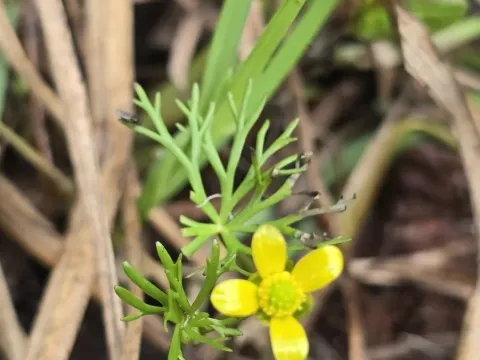
River buttercup
Ranunculus inundatus
River buttercup (Ranunculus inundatus) is a perennial aquatic plant belonging to the Ranunculaceae family. Native to Australia, it thrives in seasonally inundated areas and wetlands, showcasing remarkable resilience in both shallow water and damp soil conditions, which makes it a unique specimen for aquascaping.
What the section contains
River buttercup
Botanically, the species is distinguished by its finely divided, lacy foliage that creates a dense carpet-like effect on the substrate. The root system is robust and spreads horizontally, allowing the plant to colonize the bottom of shallow water bodies efficiently, maintaining its position against minor water disturbances.
Cultivation requirements for this species focus primarily on nutrient-rich substrate and clean water. The plant performs best in a fine, loamy soil enriched with organic fertilizers. A consistent supply of dissolved CO2 is highly beneficial, as it promotes rapid growth and the development of the characteristic delicate leaf structure.
Lighting is the most critical environmental factor for Ranunculus inundatus. To maintain its vibrant green appearance and low-growing habit, high-intensity lighting is necessary. If the light levels are insufficient, the plant tends to lose its shape and may begin to develop elongated, weaker stems that are prone to breakage.
The optimal temperature for this plant ranges from 18 to 26 degrees Celsius. Because it is sensitive to extreme frost, commercial cultivation in colder climates typically occurs in controlled environments, such as greenhouses or indoor ponds, where temperature fluctuations can be minimized to prevent plant stress.
The primary threats include excessive competition from invasive algae and poor water quality leading to nutrient toxicity. In addition, incorrect substrate composition can inhibit root development, making the plant susceptible to parasitic pathogens that attack the lower stem sections.