
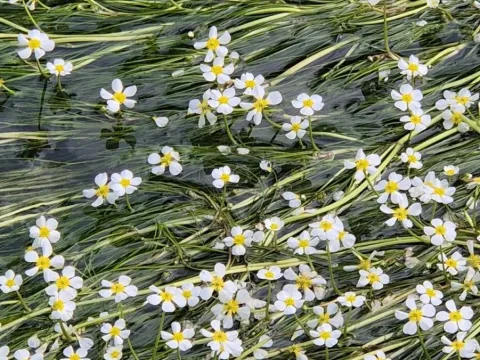
River water-crowfoot
Ranunculus fluitans
Ranunculus fluitans, known as the river water-crowfoot, is a perennial aquatic plant belonging to the Ranunculaceae family. It is natively distributed across European waterways, specializing in habitats with running water.
What the section contains
River water-crowfoot
The botanical architecture of this plant is perfectly adapted to flowing environments. Its stems are elongated and flexible, while its fine, hair-like leaves reduce water resistance, allowing it to thrive even in strong river currents.
The culture requires high water quality with significant oxygen saturation. It typically colonizes gravelly or sandy riverbeds, where it acts as a primary producer, supporting local aquatic ecosystems.
In terms of agricultural utility, it is increasingly studied for its role in water bioremediation. Its ability to absorb nutrients and stabilize riverbanks makes it a valuable species for ecological restoration projects.
Optimal environmental conditions involve steady water flow, sufficient solar penetration, and moderate temperatures. It is a strictly submerged hydrophyte that requires constant hydration for metabolic stability.
Eutrophication is the primary threat to Ranunculus fluitans. Nutrient enrichment from agricultural runoff leads to algal blooms, which outcompete the water-crowfoot by depriving it of essential sunlight and space.
Heavy metal contamination and chemical pesticide exposure from adjacent farmland are lethal to the plant. As a sensitive bio-indicator, it immediately reflects the degradation of water quality in its environment.
Siltation poses a significant physical risk. Accumulated organic sediment smothers the root systems and alters the substrate composition, often leading to stunted growth or total loss of the aquatic population.
Various aquatic invertebrates and herbivorous mollusks can cause significant damage to the plant tissue. While natural in wild settings, in high-density aquaculture, these pests can lead to severe biomass loss.
Fungal pathogens and water-borne bacteria thrive in stagnant conditions, attacking weakened plants. Maintaining proper water flow is essential to preventing the spread of diseases and ensuring plant health.